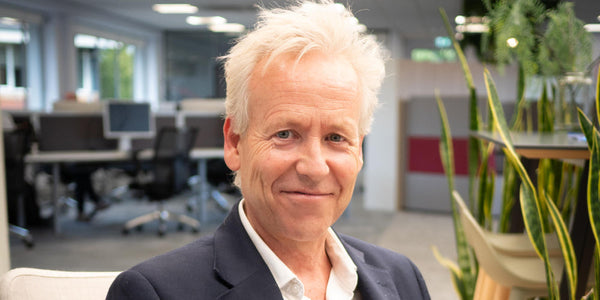


Fleet1000 speaks to Alison Bell on future-proofing fleets through data, inclusivity and adaptable decision-making
“Every generation of technology brings fear, but in reality it reshapes how people work – it doesn’t replace them."

After 18 years at Venson Automotive Solutions, Alison Bell has seen fleet management evolve through waves of technological change; from early EV adoption and telematics to today’s conversations around neurodiversity, data overload and AI. In this Fleet1000 interview, Alison explains why flexibility, inclusion and long-term thinking matter more than ever as fleets navigate cost pressure, electrification and policy uncertainty.
You’ve been with Venson for nearly two decades. How has the industry changed in that time?
“Technology has been the constant driver of change, not just in how fleet businesses operate, but in how clients, suppliers and manufacturers do too. Vehicle technology has evolved significantly, and that has a direct impact on fleet operators day-to-day.
"None of it has really been unexpected. It’s been a natural progression that the industry has largely been able to prepare for.
"What’s changed most is how fleet operators engage with technology. Take telematics as an example. Ten years ago, there was a huge focus on “big data” – what information was available and how to manage it. The challenge quickly became deciding what data actually matters.
"Fleet managers are busy people. If you’ve got hundreds or thousands of vehicles producing data every day, how much of that information do you realistically have time to look at? The real question is how you turn data into decisions that genuinely help manage risk and improve operations.”
Venson was an early adopter of electric vehicles. What stands out from that period?
“From a Venson perspective, we were involved with EVs as early as 2008. We were, as far as I’m aware, the first fleet management and leasing company to host an event where clients and prospects could experience EVs that were available at the time.
"Seventeen years ago, the market looked very different. The vehicles weren’t from mainstream manufacturers, they were from smaller companies that had taken an early leap into EV technology. Many of those businesses no longer exist sadly , having lost their funding to develop the technology. Not long after the OEMs took the lead."
Venson’s white papers, particularly on neuroinclusivity, have gained attention. What drives that research-led approach?
“The aim has always been to provide value. It’s not about hard selling; it’s about producing content that’s genuinely useful to fleet, transport and HR managers.
"We’re often told that our white papers are used internally, for papers to present to board members or reporting on a particular subject like tyres or electric vehicles, and that’s a real win for us. It means the research has added value and helped someone do their job better.
"I’m always looking ahead to subjects that will soon matter more, or that aren’t being talked about enough. Neurodiversity is a good example. Awareness has grown, but many organisations still haven’t considered what it means practically for fleet operations.
"There may be staff who haven’t disclosed that they’re neurodivergent, or who may not even realise it themselves. That doesn’t remove the impact on day-to-day fleet operations. It can influence how vehicles are specified, how cabs or load areas are laid out, and how drivers interact with their vehicles during a working day. Those considerations exist whether or not neurodiversity is formally acknowledged, which is why a more inclusive, considered approach to vehicle design and fleet policy can benefit everyone.”
What does a neuroinclusive fleet look like in practice?
“The starting point shouldn’t be specialist solutions for individuals; it should be a holistic approach.
"One of our neuroinclusivity partners and contributor to our white paper, Dr Nancy Doyle, Founder and Chief Science Officer at Genius Within, believes that designing systems for the broadest group by default leads to the most effective inclusivity. That applies to training, communication, documentation and vehicle design.
"For example, if you’re fitting out vans for a housing association, how do you lay out the back of the vehicle in a way that works for everyone, rather than singling someone out and making them feel like a special case?
"An inclusive approach often benefits all drivers, not just neurodivergent ones.”
How are cost pressures and electrification challenges shaping fleet decisions right now?
“Cost control continues to be a major issue for businesses, and it’s directly influencing how fleets approach electrification. Quite often, clients come to us with a plan to refresh their entire fleet, but budgets simply don’t allow that to happen in one go.
"What we tend to do is step back and look at how the fleet is actually being used. Using vehicle data, we can identify which leases could be extended, where vehicles could be replaced with smaller or more cost-effective alternatives, or whether full-size vans are really needed in every case. In some situations, car-derived vans or estate cars can do the job just as effectively. It’s about helping clients adapt plans that may have been set years ago but no longer stack up in today’s economic, tax and legislative environment.
"When it comes to electrification specifically, things are starting to look more positive for e-vans. Recent government clarification around MOT treatment, drivers’ hours and speed limiter requirements for 3.5–4.5 tonne vehicles has helped provide some direction. But timing remains a real challenge.
"Fleets aren’t making decisions on six- or twelve-month horizons, they’re committing to vehicles over three, four or five years. What they need is confidence that policy and taxation won’t change part-way through those contracts. While consultations are ongoing and decisions take time, uncertainty itself becomes one of the biggest barriers to electrification.”
How does Venson plan in such an uncertain environment?
“We can only advise based on what we know at the time. Trade bodies like the BVRLA and SMMT play a crucial role in lobbying for more consistent, long-term policymaking.
"Too often, announcements are made before the details are worked through, which creates uncertainty. That can push drivers and fleet operators to stick with ICE vehicles simply to avoid added admin or unknown costs.
It’s a moving feast and all we can do is provide clear, honest and impartial guidance based on current conditions.”
Looking ahead, which near-future developments do you see having the most impact on fleet management?
“Like most businesses, we’re looking at the potential benefits AI could bring, but it’s important that it’s used in the right way. For us, it’s not about replacing people or removing the personal service our clients value.
"Our model is built around dedicated account teams working closely with each client. When something goes wrong with their vehicle or there's a change of operational priorities, people want to speak to a human being who understands their fleet and their business, not a chatbot or an automated system that's impersonal and can slow things down.
"Where AI can genuinely add value is in supporting those teams: handling repetitive tasks, analysing large volumes of data, and helping us generate better insights for clients. Used properly, it gives people more time to focus on the areas where human judgement and relationships really matter.
"I believe in traditional customer service and our model is built around that, so the future isn’t about automation replacing the one-to-one customer service dynamic but having technology enhance other parts of it.”
Finally, what leadership lessons have you taken from navigating constant change?
“Communication is everything when managing and building teams. Whenever you can explain what’s happening and why, you should. And when you can’t, it’s important to be open and honest about that too.
"Change is inevitable. Having worked in the tech sector I've learnt that every generation of technology brings fear about disruption and job losses, but in reality, it tends to reshape how people – it doesn't replace them.
"Technology can do a lot, but it can’t solve everything. There’s always an emotional gap, people still want human interaction and touchpoints. Managing change well means not panicking, not blindly jumping on bandwagons, and being thoughtful about how new tools are introduced.
"At its core, leadership still comes down to clear communication, setting expectations, and bringing people with you through change.”
Explore more in this series: Venson's advice on how to electrify without blowing the fleet budget.