


The Government has confirmed a temporary easement to prevent steep Benefit-in-Kind (BiK) tax increases for plug-in hybrid company cars, following concerns that new emissions testing rules would significantly raise CO₂ values — and therefore tax bills — for thousands of drivers.
The announcement, included in the Autumn Budget, is designed to preserve fairness across the UK company car system as the country moves toward adopting the EU’s latest Euro 6e-Bis emissions standard. This updated testing regime, which applies in Northern Ireland from January 2025 and is scheduled for Great Britain from April 2026, can materially increase the CO₂ figure for some PHEVs, in some cases doubling the official rating. Without intervention, fleets faced abrupt BiK hikes that risked undermining salary sacrifice schemes, capital allowances and broader fleet decarbonisation plans.
What the easement does
Under the temporary measure, qualifying plug-in hybrids will be treated as emitting 1g/km CO₂ for BiK purposes, rather than using the higher figure printed on the V5C. This protects drivers from sudden tax spikes and preserves predictable cost modelling for employers. The Government estimates around 150,000 employees will benefit.
The easement will apply retrospectively from 1 January 2025 until 5 April 2028, with transitional arrangements for some PHEV models extending to April 2031. Northern Ireland will also benefit from backdated relief to align with the earlier introduction of Euro 6e-Bis.
Why the change matters for fleets
Ministers acknowledged that while higher-emission vehicles should face higher taxes, company cars remain a crucial lever in accelerating uptake of lower-emission technologies. Without the easement, some PHEVs would have seen disproportionately sharp tax increases that could have slowed the shift away from petrol and diesel.
The Treasury also expects the change to encourage some drivers to move from combustion models into PHEVs during the easement window.
Eligibility rules
To access the temporary relief, vehicles must meet all of the following conditions:
First registered on or after 1 January 2025
Official CO₂ rating of 51g/km or above
Certified under an emissions standard other than Euro 6d-ISC-FCM or Euro 6e
An electric-only driving range of at least 1 mile
Driver refunds
Employees who have already paid higher BiK charges due to the updated CO₂ figure will be able to reclaim overpayments through the usual employer reporting system.
Similar Stories

Could wider 20mph limits change fleet journey planning?
ZEV mandate changes could put £1.56bn of charging investment at risk
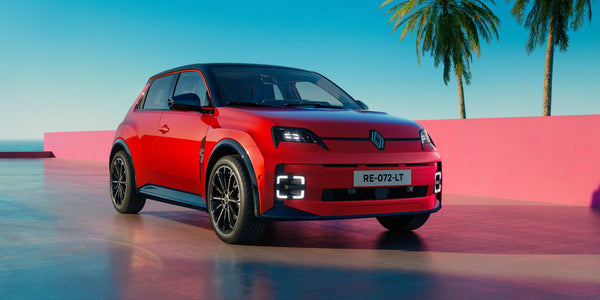
Renault 5 updated with extra range and options, plus smaller battery pack
The Renault 5 has been hugely popular for fleets, thanks to its desirability ...
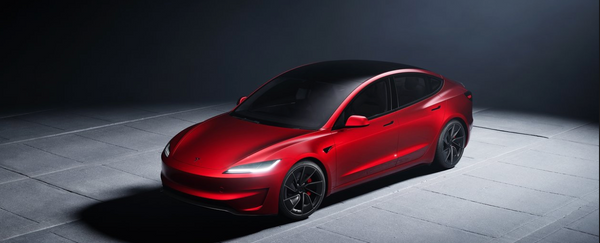
Three-million Teslas in China recalled over pop-out door handles - prompts industry re-think
A total of 4.3 million cars - three-million being Teslas - are being recalled...
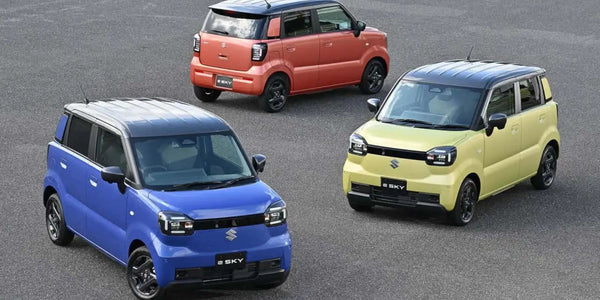
Suzuki e-Sky revealed: electric Kei car coming to UK in 2027
Fleets shopping for city-friendly electric vehicles (EVs) have a good choice ...
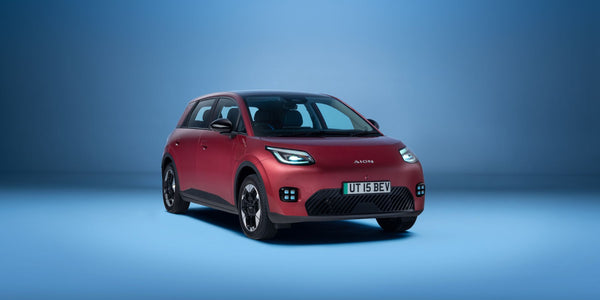
Aion UT supermini to be priced from £28,950
The Aion UT is the new Chinese supermini ready to take on established Europea...

Omoda&Jaecoo UK sells 100,000 cars in less than two years
Omoda&Jaecoo UK has surpassed 100,000 vehicle registrations in less than ...
ZEV mandate consultation: 'timely opportunity to optimise the pace of change' says SMMT
Following the recent announcement of the UK Government launching a consultati...
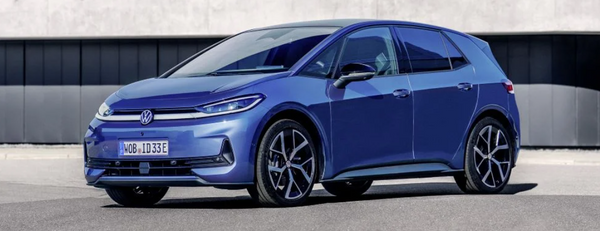
Volkswagen ID.3 Neo goes on sale - all models eligible for £1,500 grant
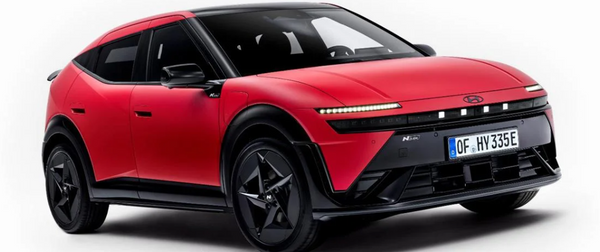
Hyundai Ioniq 3 goes on sale in UK, priced from £22,245
Fleet buyers considering small electric vehicles have a new contender to cons...

Mileage blockers threaten EV pay per-mile tax - but new legislation in the works, says RAC
With just two-years until the UK Government launches its pay per-mile road ta...