


The fleets that escape data overload decide what matters, simplify how they share insight and embed data into everyday decisions rather than resorting to collecting more data.
This short playbook sets out what that looks like in practice, using real fleet examples to show how clarity is built without adding complexity.
1. Start with decisions, not dashboards
The most effective fleets reverse the usual approach to data. Instead of asking what their systems can report on, they start with the decisions they need to make: keeping vehicles legal, reducing cost, improving safety, or planning replacement cycles.
Once those decisions are clear, the volume of data needed often shrinks dramatically. Insights that don’t inform an action can be deprioritised.
This is where many fleets unlock momentum, by analysing less with greater purpose.
2. Simplify and consolidate before integrating further
Data overload is often caused by fragmentation rather than absence. When information sits across portals, spreadsheets and reports, even good data becomes hard to trust.
A useful example is FleetCheck’s work with Swift Scaffolding. The business already had multiple data streams in place, but insight was spread across systems. By consolidating maintenance, compliance and operational data into a single structured platform, the fleet gained a holistic view of activity without increasing reporting burden. The result was better visibility, less duplication and clearer decision-making, not more data.
For fleets feeling overwhelmed, this reinforces a key rule: simplify first. Integration only adds value once information is aligned and trusted.

3. Measure what protects people and vehicles, not everything that moves
Once data is consolidated, the next step is focus. Fleets don’t need to track every metric equally. They need to decide which signals are critical.
A strong example comes from Quartix’s work with Morson Vital, where telematics was used to prioritise safe driving behaviour and vehicle condition rather than exhaustive journey analysis. By focusing on the data that directly affected safety and risk, managers were able to intervene where it mattered instead of wading through low-impact reports. In turn, Morson's insurance lost ratio was reduced from 87% to 32%.
This reinforces an important principle: the value of data is defined by the decision it supports. If a metric doesn’t change behaviour, cost or risk, it probably doesn’t need daily attention.
4. Use behaviour data to target support
Behavioural data delivers the most value when it’s used selectively. Blanket surveillance tends to create resistance, while targeted insight supports improvement.
A clear illustration comes from Sentiance’s work with the RAC, where behavioural insights were used to identify patterns linked to distracted driving. Instead of monitoring all drivers equally, the data helped target coaching where it was most needed and reduced risk through early and focused intervention.
Behaviour data works best when it answers “who needs support, and why?” rather than “what did everyone do?”
5. Use AI to surface priorities
As fleets mature in their use of data, AI is increasingly being used to reduce noise rather than create it. When applied well, it helps teams spot patterns, surface priorities and act faster.
FleetWise’s latest report with Tranzaura lays out 10 steps to revolutionise fleet management with AI. Richard Horton, Head of Fleet at Mediquip, explains how AI-driven insight changed day-to-day operations:
“Real-time dashboards powered by AI mean the team can now centrally monitor the lifecycle and performance of the fleet, consolidating information and achieving best practice around instant reporting, working to create a safer and more engaged culture.”
The takeaway for fleets is not to adopt AI for its own sake, but to use it where it replaces manual interpretation and highlights what needs attention now.
Read Making AI Work for Your Fleet with FleetWise and Tranzaura.
What good looks like in practice
By the end of this process, a fleet using data well should feel more confident and less busy.
Decisions are easier to explain. Reports are shorter and more trusted. Drivers receive relevant guidance rather than generic oversight. And digital tools reduce admin instead of adding to it.
Fleet data overload isn’t solved by technology alone. It’s solved by clarity of purpose, disciplined prioritisation and a willingness to stop measuring what doesn’t move the needle.
Read guidance in this series
Better Fleet: How to stop fleet-data-overload impeding decision making
Better Fleet: The fleet data signals that matter and the responses that work
Or join Better Fleet for best-practice planning that's proven through real-world case studies:
Click here: Better Fleet Campaign

Similar Stories

Aion UT supermini to be priced from £28,950
The Aion UT is the new Chinese supermini ready to take on established Europea...

Better Fleet: A practical playbook for choosing fleet software
Fleet software should solve problems, not create more systems to manage. Befo...

Better Fleet: What an effective fleet software setup actually looks like
A good fleet technology setup does not necessarily mean putting everything in...

Better Fleet: What fleet software actually is and how you can get more value from it
Fleet software should make running vehicles easier. Yet the term now covers s...

The Government launches ZEV mandate review
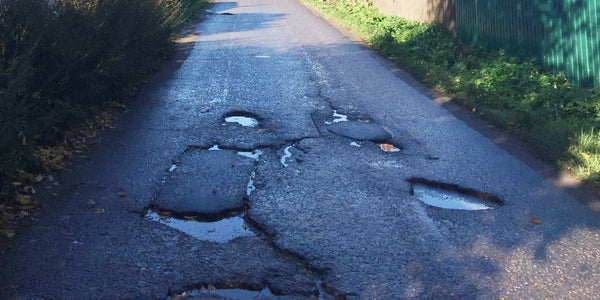
Pothole damage should be measured as a fleet cost
Britain’s deteriorating roads are generating another preventable cost that fl...