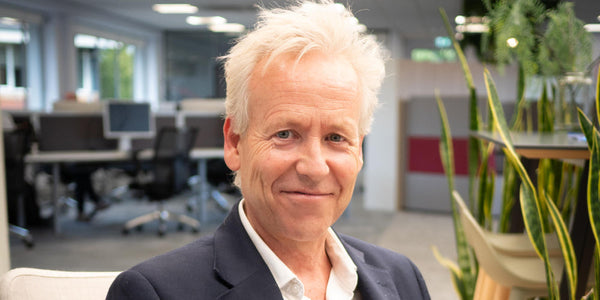


Fleet1000 speaks to the BVRLA’s Toby Poston on narrative, the uneven race to decarbonisation and what fleets need next
"In a world of tariffs, new business models and new entrants, we as an organisation must be ready. We need the skills, the systems, the relationships and the resources to pivot quickly."
Eighteen years after joining the BVRLA as a former BBC journalist with a communications brief, Toby Poston now leads the trade body at one of the most disruptive moments in industry history. With electrification accelerating unevenly, regulation intensifying and new global players reshaping the market, the role of the association and its chief executive has rarely meant more.
In this Fleet1000 interview, Toby reflects on his journey to Chief Exec and how the BVRLA is helping fleets navigate decarbonisation, used EV risk and regulatory change.

Tell me a bit about your background:
“I started out on a title called Motor Transport, which still exists today, then moved over to Computer Weekly as a news editor before joining the BBC. I spent about seven years there; firstly on their in-house newspaper, and then in the Economics and Business Unit producing bulletins and stories for TV, radio and online.”
What motivated you to move from producing and editing news to representing the bodies you’d reported on?
“Well, it’s all storytelling. I’ve probably had three or four careers – trade journalism, broadcast journalism, and then, when I joined the BVRLA 18 years ago, PR and communications – and there’s stories to tell in each. At the BVRLA it’s about telling them to members, to government, and through marketing. You start to see where you can add value, which for me naturally led to the lobbying side – telling the industry’s story to policymakers and government.
"I was also lucky with timing. All the decarbonisation work was kicking off, connected vehicles, air quality and clean air zones, tariffs, it got really interesting. I’ve always been a business journalist, so I’ve ridden the wave wherever it’s taken me.
"And don’t get me wrong, I’ve found myself in this seat because storytelling and being a campaigning voice for our sector is what our members really need right now. If they needed an accounting whizz, or an automotive technical genius, I wouldn’t be here. I’ve always believed in horses for courses – different organisations need different leadership at different times – and I’ve been fortunate that the BVRLA put my skill set to good use.”
You mention timing, was it the urgency of the decarbonisation push that drew you to the BVRLA?
“No, because when I joined 18 years ago the decarbonisation push wasn’t quite there. Back then our sector was telling two main stories: one about vehicle leasing and long-term fleet operations, and the other about daily rental.
"For leasing and fleet, it was a very mature business model. It had operated in roughly the same way for decades – providing petrol or diesel vehicles on long or short-term contracts. The biggest annual influence on that world was the budget. It was all about tax: fuel duty, company car tax, and all the specific tax levers that feed into total cost of ownership. So that was always a major moment in the year for us, trying to influence government to cut a particular tax or at least avoid an increase.
"With daily rental, the focus was more on the consumer side. People renting cars at airports, often stressed, often in a foreign country with a different language, the opportunity for misunderstandings or disputes is all too obvious. Given the scale of the industry – millions of renters a year – that generated a lot of media attention. I used to do quite a bit of TV and radio, explaining issues like damage charges or terms and conditions. If you’re a major international rental brand, you would prefer not to have your brand connected to those stories, it makes much better sense for your trade body to speak on behalf of the whole sector. That was a big part of the role.”
What's the main focus of your role now?
“The core of my role today falls into two big areas: decarbonisation and regulation.
“Decarbonisation is number one. I describe it as the existential challenge of our generation, and everyone in our sector has broadly bought into it. We all want our kids to live in a world where temperatures are stable and predictable, but delivering that is a massive job. And the fleet industry isn’t one size fits all. It’s incredibly diverse.
"I often say that some fleets are running the decarbonisation race on steroids. Because of the tax incentives and grants they’ve had, they can sprint ahead and register 80, 90, even 100 percent EV. Well done to them. But most fleets aren’t on steroids. They’re running a nightmarish obstacle course with things being thrown at them. If you’re a rental company trying to hand an EV to someone who’s just flown in from America and needs to get across the country, that’s a hostile environment. If you’re a van operator towing heavy kit or using a tail lift, good luck finding an electric van that can do that job without costing more and losing hours a day to charging.
"Our job is to get that whole diverse group across the EV finish line. We won’t succeed until the last fleet crosses it, and it absolutely will not be in 2030. Part of our role is managing government expectations and showing clearly where it’s going well and where it’s struggling.
"The second big pillar is regulation. The environment is getting more turbulent and burdensome, and our industry sits in two camps. Some members are heavily regulated mainly by the FCA and particularly around motor finance. Others aren’t formally regulated, so as a trade body we add a layer of self-regulation through training, audits and our Codes of Conduct. It helps us maintain standards, respond to new technology and consumer trends, and also send a clear message to regulators that this is a well-run sector.
"But regulation is getting more complicated. Regulators never sit still, they often tinker without fully understanding what customers need or how the sector operates in the real world, which is how we ended up with this year’s confusion over motor finance commission. Government is also having to update huge amounts of legislation that was written before digitisation and electrification came along, so they’re playing catch-up.
"And all of this sits in a world that’s politically volatile. Globalisation is retreating, the true cost of sustainability is hitting home, and China is flooding the West with excellent, affordable new product, upturning decades of very stable and predictable markets and supply chains. In a world of tariffs, new business models and new entrants, we as an organisation must be ready. We need the skills, the systems, the relationships and the resources to pivot quickly, whether that’s issuing guidance, lobbying or launching new research. That’s the big picture.”
You mention tariffs and cheaper models flooding the market. I’ve noticed BVRLA have been pushing used EVs lately. Is this related?
"Decarbonisation legislation like the ZEV mandate is completely focused on new car sales: how many new EVs can be sold, and when will we stop selling new petrol and diesel models? That makes sense for a new technology pathway, but what’s been massively under-appreciated by government and even OEMs is that the new car market is under two million vehicles a year. The used market is four times bigger.
"And most people don’t buy a vehicle outright. Around ninety percent lease or rent, making driving more affordable because you pay for the period you use it based on what the leasing company predicts the vehicle will be worth in three years’ time. Historically depreciation was pretty stable at around twenty-five to thirty percent over three years, so you could quote reliably.
"EVs have completely blown up that mature model. The used market has gone into a massive slump because incentives have been directed only at new EVs and supply has surged. All those new vehicles going into company car schemes or salary sacrifice relate to a huge wave of used EVs coming back three years later. So predictable depreciation of twenty to thirty percent is now fifty to seventy percent. On a forty-to-sixty-thousand-pound vehicle, that loss is enormous.
"We’ve been trying to make government understand that if you don’t fix the used market, companies simply won’t continue absorbing those losses. Look at the major leasing firms: they’ve announced hundreds of millions of pounds in depreciation losses. The only alternative is to pass the cost into the lease price. It’s a nightmarish loop where OEMs cut prices to meet the mandate and the cuts depress used values further.
"That’s why we’re pushing the used EV market so hard, it’s a classic supply and demand issue. Stabilising used values is essential if you want a functioning new EV market. The two are completely linked.”
Is it lobbying that’s at the forefront of this used EV push?
“It’s a mixture, and lobbying is definitely one of the main levers. You’ve got the very expensive end of the scale – things like grants if the government is feeling generous. And then you’ve got the zero-cost end, like running a communications campaign or introducing standardised battery health checks so people feel more confident buying a used EV because they know exactly what state the battery’s in.
"We also look for weak spots in the market. One of the big ones we’ve identified is independent garages. Franchised dealers are generally pretty good at selling used EVs, but only around twenty percent of independents are doing it. A lot of that’s down to uncertainty and turbulent pricing, so that’s an area where the BVRLA really needs to nurture confidence.
"You’ve got to ask: why would an independent garage want to sell an EV? They often don’t have charging infrastructure on-site. Servicing can be more difficult. They’re not convinced there’s enough demand, which tells us we need to focus on education. So, it really is a blend of communication, confidence-building, and lobbying government to address the bigger structural issues.”
You mentioned that hostile rental environment when it comes to EVs. How do you guide and protect members through that?
“We produce a report called the Road to Zero Report Card, which tracks a whole range of factors and breaks them into three pillars: supply, demand and infrastructure.
"If this were any normal market, you’d just let it develop organically. EVs are a good thing – they’re a bit expensive, people are unsure, some are early adopters and some are terrified of new tech – but over twenty to forty years it would all settle. That’s what would happen in a natural market.
"But we don’t have that luxury. We’ve got a mandate to save the planet, so we need to keep a constant watch on where that transition is in danger of stalling. On supply, we ask: is there a good, affordable range of vehicles that stack up against the petrol and diesel models people are used to in terms of price, performance and capability?
Then we look at infrastructure. Do we have enough ultra-rapid charging on motorways and key routes? Is there affordable charging at destinations and depots? Is electricity priced sensibly? And crucially, if a business wants to put a rapid charger on its site, can the grid operator give them a timely and affordable connection?
"After that, we look at the tax regime, grants and the used EV market. It’s about making sure everything works holistically because this isn’t a transition you can leave to chance.
"So, our job with members is to guide them through all of that. We share research, we host networking events, and we bring together suppliers, OEMs and van manufacturers. Keeping the community engaged is how we understand what stakeholders need and where the pressure points are.”
What near-future developments are you anticipating for the industry?
“We’ve got a very diverse membership – around a thousand companies – from the biggest leasing providers right down to firms with one depot and 25 or 50 vehicles. It’s easy to focus on the big players and the big headlines, but going forward we need to highlight the value we provide to those smaller operators too, because while we’re dealing with decarbonisation and new regulation, the ‘same old’ pressures haven’t gone away.
"Insurance costs are still rising. New vehicles are getting increasingly expensive. And repairability is becoming a huge issue. Manufacturers are now producing vehicles with technology they’ve never had to repair themselves, and they’re leaving the industry to figure it out. It’s bonkers, but that’s where we are. So, we need to ask: who actually has the skills and equipment to maintain these increasingly complex vehicles?
"Risk and fraud are also growing issues, especially as vehicles become more valuable and as AI makes certain types of fraud easier. And then you’ve got autonomous vehicles. I’m not a Luddite, but I don’t think that market will move as fast as some people say. Still, driverless cars will be hitting UK streets next year and as that particular fleet and business model grows, we have some important questions to answer about how those vehicles will be managed and who is responsible when things go wrong.
"There are so many developments coming down the track, and our job is to stay ahead of them and protect our members and their customers.”
Any key takeaways or leadership lessons?
“I wouldn’t say I’ve got a real Toby’s way, but I guess my style comes heavily from my journalistic background – I’m a great believer in having a clear story to tell.
"The people I want around me are bright, ambitious, doers. And if you want to motivate people like that, you give them a clear sense of direction and then leave the ‘safe space’ to get on with it. You give them the picture, the tools, the objectives, the metrics and then you let them deliver.
"That’s how we support our members too; give them the information and the environment to plan their own business.
"Something I’ve learned over the years is that criticism always lands harder than praise. You still need to give tough feedback, but for every one piece of criticism you should give multiple bits of praise.
"It’s still early days for me too, and I’m constantly learning, picking up tips and ideas from our Board or the members I meet out and about. One big lesson I have learnt in my first year is the importance of having good people around you and resisting the ‘hero’ instinct to try and do everything yourself. That is work in progress!”