


As fleets weigh up the move from diesel vans to electric alternatives, questions around range, charging, payload and whole-life cost remain central to the decision.
In the first part of our interview with Calum James, Country General Manager at Farizon Auto UK, we look at how those concerns are changing.
Find out what fleets should be measuring beyond headline range, and why vehicle design and charging strategy can make a significant difference to the success of eLCV adoption.
What are fleet operators telling you are still the biggest barriers to replacing diesel vans with electric ones, and how are those barriers becoming easier to overcome?
The biggest barriers tend to revolve around incorrect perceptions of range and charge times. The pace of innovation means many of today’s vans have overcome these compromises.
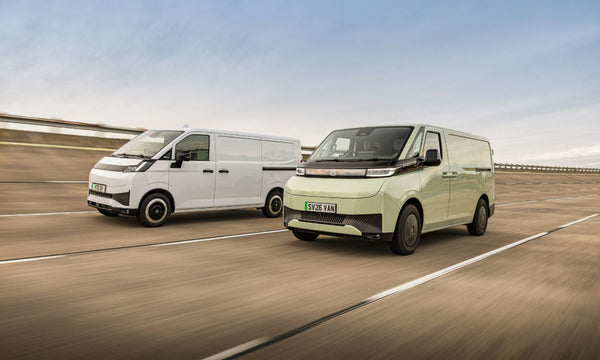
The Farizon SV and V7E vans are born-electric vans, designed to be electric from the outset, and boast range and fast-charging times that make them more than a match for the equivalent diesels for the vast majority of operations. They also provide highly competitive load-hauling capabilities.
The V7E medium van has a range of up to 204 miles (WLTP combined), offers a 20-80% charge time in as little as 18 minutes, and delivers a payload of up to 1338kg.
The SV large van has a range of up to 247 miles (WLTP combined), can charge from 20-80% in just 36 minutes, and has a payload of up to 1350kg.
Both vans are compelling propositions for fleets.
For fleets assessing whether an electric van can genuinely replace a diesel vehicle on a particular duty cycle, what should they be measuring beyond headline range?
While range is an important factor, fleets should look at both the actual use cases for their vehicles combined with the savings that they could make by replacing a diesel van with an electric equivalent. While upfront costs can sometimes be higher, whole-life costs can soon pivot the equation in their favour.
Looking at Department for Transport (DfT) figures for the period between March 2023 and March 2024, along with figures from Zego Insurance for 2025, the average mileage of a van driver was in the region of 8257 miles a year. That’s roughly 32 miles per weekday.
If we took this average annual mileage of a van driver, driving our most popular Farizon SV (an L1H1 fitted with the 83kWh battery) with 75% of charging conducted at home (or at a depot), and 25% using a public charger, eLCV drivers would be saving an impressive 56% of what it would cost to fuel a diesel van. And this is before you consider other savings, such as lower servicing costs and exemption from low emission zone charges.
Farizon’s vehicles have been designed as electric vans from the outset rather than adapted from an ICE platform. From a fleet manager’s perspective, where does a dedicated EV platform make the biggest practical difference?
Electric vans that have been adapted from existing ICE platforms are often compromised, because they must squeeze heavy battery packs and electric motors into a vehicle structure designed for an engine, a fuel tank and a gearbox.
Born-electric models like ours are optimised for the advantages of the battery and motor, offering better packaging, lower load heights, and more cargo space. For example, the Farizon SV offers up to 13 m3 of cargo volume and an extra-low loading height of just 550mm. While this makes life easier for drivers, fleets can factor in greater convenience, versatility and load carrying potential.
Charging can determine whether an electric van fleet succeeds operationally. What are the most effective charging strategies you are seeing among fleets – depot charging, home charging, public rapid charging or a combination – and how should operators decide which model suits them?
Most of our fleet customers use a combination of charging strategies, with a focus on depot and public charging. While many individual tradespeople will choose to fit a home charger to charge their vans, those who drive a company eLCV as part of a fleet will often rely on charging facilities at their place of work and/or out on the open road.
Ultimately, each customer is different, and they assess charging based on their requirements. One of our fleet customers, MacFarlane Telfer, is currently operating a fleet of 20 Farizon SVs. They’ve investigated charging apps, public accounts, automatic payments and simpler home-electricity reimbursement.
We understand that switching from a diesel fleet to an electric one can be a big step for many companies. We work with specialists who can help them choose the right charging solutions for them. For example, we work with ChargePoint, a leading provider of EV charging solutions, to provide commercial-grade charging for larger business and fleet customers.
• For fleets considering electrification, the message is clear: success depends on matching the vehicle and charging strategy to the real-world duty cycle.
In part two, Calum looks at what Farizon is learning from fleets already making the switch, where electric vans are proving easier to adopt than expected, and how future developments in range, charging and technology could shape the next phase of eLCV adoption.
Read about what fleets are learning after making the switch to electric vans.
Similar Stories
What fleets are learning after making the switch to electric vans
What happens once electric vans move beyond trials and into everyday fleet op...

Geely targets 8000 UK fleet sales as Andrew Stuart sets out growth plans
Geely Auto UK sales director Andrew Stuart discusses its 8000-unit fleet targ...

Smarter maintenance, cutting fleet downtime, and keeping vehicles productive
How AI and connected diagnostics can help fleets predict faults and speed up repairs
If reducing downtime is the objective, the challenge for fleets is increasing...