


Once fleets have a clear picture of the challenge, the next question is what good actually looks like.
The most successful organisations aren't simply producing annual carbon reports to satisfy compliance requirements. They're using emissions data to improve everyday fleet decisions, from vehicle utilisation and maintenance to routing and replacement strategies.

Build a single source of truth
One of the biggest differences between high-performing fleets and those still struggling with emissions reporting is data integration.
Rather than relying on separate spreadsheets, leading operators are bringing together:
- Telematics and route planning
- Fuel card and EV charging data
- Maintenance schedules and vehicle utilisation
Increasingly, fleet management platforms from providers such as Geotab, Webfleet, Michelin Connected Fleet and Quartix combine these datasets into a single view, giving fleet managers far greater visibility across their operations.
Measure more than tailpipe emissions
Effective emissions reporting goes beyond recording litres of diesel or electricity consumed.
It should capture emissions across company cars, vans, EV charging, grey fleet and salary sacrifice vehicles, while distinguishing between direct and indirect emissions. That provides a far more accurate understanding of where carbon is being produced and where the biggest opportunities for improvement exist.
Transport remains the UK's largest emitting sector, accounting for 29% of total greenhouse gas emissions, with 89% of those transport emissions coming from road vehicles. Improving the quality of fleet data can therefore have a significant impact on an organisation's wider decarbonisation strategy.

Turn reporting into operational improvements
Leading fleets don't collect emissions data simply to complete ESG reports. They use it to improve operational performance.
Research cited by the European Environment Agency shows organisations using telematics have achieved fuel savings of up to 15% through route optimisation and reduced idling, while proper vehicle maintenance can reduce fuel consumption by up to 20%.
Integrated fleet platforms help managers identify:
- Excessive idling and inefficient routes
- Missed servicing and maintenance trends
- Poor vehicle utilisation
- Opportunities to reduce fuel use and emissions
As Jesper Lyndberg, CEO of Alphabet International, explains:
"The organisations that will succeed are those that stop waiting for clarity and start building the right foundations today, with accurate data, effective tools, and solid structures."
Data delivers results
The benefits of integrated reporting are already being demonstrated in practice.
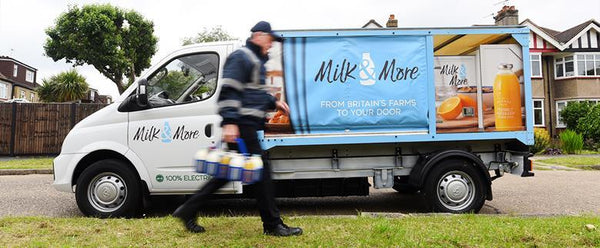
Milk & More, working with Geotab, connected more than 500 vehicles through a single telematics platform, combining operational and environmental data to support better fleet decisions. The business reported annual fuel savings of around £2 million, reduced fleet emissions by 4,920 tonnes of CO₂, and cut speeding incidents by 21%, demonstrating how better visibility can improve both sustainability and operational efficiency.

Visibility creates better decisions
The fleets making the fastest progress aren't necessarily those with the most ambitious net-zero targets. They're the ones with the clearest understanding of what their vehicles are doing every day.
Once fuel, charging, maintenance, routing and telematics data are connected, emissions reporting becomes more than a compliance exercise. It becomes a tool for:
- Smarter vehicle replacement decisions
- Better route planning
- Lower operating costs
- More accurate sustainability reporting
In the final article, we'll explore the practical steps every fleet can take to build a more accurate emissions reporting process and turn better data into measurable carbon reductions.
More guidance in this series:
Carbon blind spots are making emissions reporting harder than it needs to be
A practical playbook for measuring fleet emissions accurately
Join Better Fleet for best-practice planning that's proven through real-world case studies:
Click here: Better Fleet Campaign

Similar Stories
Better Fleet: Design a fleet trial that proves value before rollout
Fleet pilots often produce positive results. That does not necessarily mean t...
Better Fleet: Make the business case survive the contract
One of the weaknesses in traditional fleet procurement: A supplier may delive...

Better Fleet: Decide what has to be true instead of relying on supplier promises
Fleet suppliers increasingly sell measurable outcomes rather than simply prod...
Success Stories: How Geotab telematics helped save Milk & More a cool £2m
The resulting fuel and energy savings provided a fast return on investment on...

Better Fleet: Futureproof EV policy by managing rules like an operating system
An EV policy written today will change as charging technology develops, vehic...
Better Fleet: EV adoption is creating policy debt, and exceptions are where it shows first
Most fleet policies were not designed around vehicles that refuel at an emplo...