


Knowing your fleet's carbon footprint is one thing. Building a reliable process for measuring and reducing it is another.
The most successful fleets don't rely on one annual report. They collect accurate data throughout the year and use it to support operational decisions. Here's where to start.

1. Establish an accurate baseline
Before setting reduction targets, understand where your emissions are today.
Where possible, use actual fuel, mileage and charging data rather than estimates. The Energy Saving Trust identifies fuel consumption as the most accurate method of calculating fleet emissions, giving you a reliable benchmark against which future improvements can be measured.
Brands to explore: Jaama, FleetCheck can help centralise fleet records and reporting.
2. Measure every fuel type and charging source
Your emissions data should reflect the whole fleet, not just diesel vehicles.
That means capturing:
- Diesel and petrol consumption
- Depot and workplace charging
- Home charging reimbursement
- Public charging
- Grey fleet mileage where appropriate
Using actual consumption data is important. Every litre of diesel produces around 2.68kg of CO₂, while every litre of petrol produces approximately 2.31kg.
Brands to explore: Allstar and Rightcharge help fleets capture fuel and charging data across multiple payment methods.

3. Include Scope 1, 2 and relevant Scope 3 emissions
Many fleets still focus solely on tailpipe emissions.
A more complete picture should include:
- Scope 1: Fuel burned by company vehicles.
- Scope 2: Electricity used to charge EVs.
- Relevant Scope 3: Grey fleet and salary sacrifice vehicles where they form part of business travel.
Capturing these consistently makes reporting more robust and helps avoid gaps as reporting requirements evolve.
4. Replace spreadsheets with connected fleet data
Emissions reporting becomes much easier when operational systems work together.
Instead of manually combining reports every month, connect telematics, route planning, maintenance scheduling, fuel cards and charging information into one platform. This not only improves reporting accuracy but also highlights inefficiencies that would otherwise be missed.
Brands to explore: Geotab, Webfleet, Michelin Connected Fleet and Quartix all support integrated fleet reporting with varying levels of operational and sustainability insight.

5. Use emissions data to change driver behaviour
Reporting should lead to action.
Driver behaviour has a measurable impact on emissions, with smoother driving capable of reducing fuel consumption by 10-15%. Monitoring idling, harsh acceleration and speeding alongside emissions data allows fleets to identify where coaching will have the greatest impact.
Brands to explore: Lightfoot combines driver coaching with real-time feedback to help improve efficiency and reduce emissions.
6. Review performance every month, not every year
Annual reporting tells you where you've been. Monthly reporting helps you decide where to go next.
Track emissions alongside fleet KPIs such as:
- Fuel consumption
- Vehicle utilisation
- Idling time
- Maintenance compliance
- EV charging behaviour
Reviewing these together makes it easier to spot trends before they become costly operational problems.

7. Turn emissions reporting into better fleet decisions
The best fleets don't measure carbon simply to satisfy compliance requirements. They use emissions data to inform everyday decisions.
That could include replacing high-emitting vehicles, redesigning routes, improving maintenance schedules or accelerating EV adoption. Hybrid vehicles, for example, typically emit 20-30% less CO₂ than conventional petrol or diesel vehicles, making them a useful transitional option where full electrification isn't yet practical.
Ultimately, the fleets that make the fastest progress are those that treat emissions reporting as another operational KPI. Accurate data doesn't just support sustainability goals; it leads to better-informed decisions, lower running costs and a more efficient fleet overall.
More guidance in this series:
Carbon blind spots are making fleet decarbonisation harder than it needs to be
A practical playbook for measuring fleet emissions accurately
Join Better Fleet for best-practice planning that's proven through real-world case studies:
Click here: Better Fleet Campaign

Similar Stories
Better Fleet: Design a fleet trial that proves value before rollout
Fleet pilots often produce positive results. That does not necessarily mean t...
Better Fleet: Make the business case survive the contract
One of the weaknesses in traditional fleet procurement: A supplier may delive...

Better Fleet: Decide what has to be true instead of relying on supplier promises
Fleet suppliers increasingly sell measurable outcomes rather than simply prod...
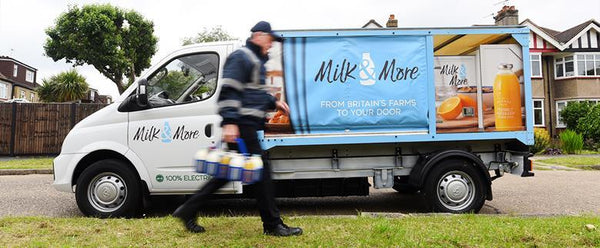
Success Stories: How Geotab telematics helped save Milk & More a cool £2m
The resulting fuel and energy savings provided a fast return on investment on...

Better Fleet: Futureproof EV policy by managing rules like an operating system
An EV policy written today will change as charging technology develops, vehic...
Better Fleet: EV adoption is creating policy debt, and exceptions are where it shows first
Most fleet policies were not designed around vehicles that refuel at an emplo...