


The Autumn Budget delivered one of the most consequential sets of policy changes for fleet sustainability in recent years. While the Government used the moment to introduce long-anticipated taxation changes for electric vehicles (EVs), it also offered new funding to support adoption and provided clarity in areas that have caused anxiety across the sector.
As ever, the industry response has been forthright. From concerns that new EV taxes could slow momentum, to cautious optimism about additional grant funding, this week’s announcements reveal a fleet sector that remains fully committed to net-zero—but wary of mixed signals.
Here are the key stories shaping the sustainability agenda.

1. Pay-Per-Mile EV Tax: Necessary Reform or Well-Timed Risk?
The headline announcement was the introduction of a pence-per-mile tax on EVs and PHEVs, arriving in April 2028. Fully electric vehicles will be charged 3p per mile and plug-in hybrids 1.5p, increasing annually with inflation.
The Treasury argues this is a matter of fairness as fuel duty revenue collapses. However, early reactions highlight the risk that the policy may dent confidence at a critical moment for electrification.
- Paul Hollick (AFP) called the Budget “a point of considerable interest” and urged a sector-wide discussion to shape implementation, stressing the tax “shouldn’t arrive in a form that could hamper electrification.”
- Edmund King (AA) warned the timing must be “simple, trusted and equitable,” noting the danger that introducing the tax too soon could “slow down the switch to electric cars.”
- Matt Dale, Director of TZConsultancy, said of the new mileage-based tax “the timing risks undermining confidence in a market that still requires support to reach maturity.”
‘A first step towards full road pricing’
Harvey Perkins, Co-founder at HRUX, noted the structural significance: “The 3ppm rate is significant because it’s the first step towards full road pricing, and the OBR estimate it will prevent over 300,000 EVs from finding a home.” He described the charge as “less welcome,” highlighting operational challenges such as “collecting and validating all of that usage data.”
A leasing CEO added further context: for the average EV driver, the new charge equates to around £255 a year—roughly half the fuel duty cost of a typical ICE driver. And because the change is still several years away, leasing providers and fleets can build these costs into future whole-life models.
Matt Dale added that the used EV market faces the greatest disruption: “Residual values are already under pressure… adding a new cost burden could further weaken demand for older EVs.” High-mileage fleet users could see annual costs of “£600 to £1,000,” requiring “much more precise mileage forecasting” in leasing agreements.
2. Temporary PHEV BIK easement to avoid sudden tax spikes
The Budget also confirmed a temporary benefit-in-kind easement for plug-in hybrids, designed to prevent steep increases in tax liabilities caused by new eBIS emissions testing standards.
From January 2025 to April 2028, the CO₂ value used for BIK purposes on affected PHEVs will be deemed at 1g/km, rather than the higher tested figure. This protects drivers and fleets from sudden tax jumps and keeps PHEVs viable for essential users who cannot yet fully transition to EVs.
This protection prevents a cliff-edge rise in costs for PHEV users.
Autumn Budget 2025: Government Confirms Temporary BiK Relief for Plug- – FleetWise
 3. How the eVED System Will Work: Self-Reporting, MOT Audits and a Low-Tech Model
Alongside confirming the new pence-per-mile charge, the Government has published detailed proposals for how eVED will operate — and the system represents a significant administrative shift for fleets.
Rather than using telematics, digital odometers or connected-vehicle data, eVED will rely on a self-reported mileage model, reconciled annually and validated through MOT testing.
A bolt-on to existing VED processes
Drivers will estimate their annual mileage when paying VED, choosing either to pay upfront or spread payments throughout the year. At year end, they must submit actual mileage, triggering either a refund or a top-up based on the difference. The DVLA will validate mileage through the MOT system, with new vehicles checked around their first and second registration anniversaries.
Audit pathways and risk for fleets
Mileage discrepancies between self-reported figures and MOT data may prompt DVLA review, placing new emphasis on robust internal mileage capture, particularly for fleets with:
- - shared vehicles
- - pool cars
- - rental and short-term hire
- - variable duty cycles
Foreign mileage will also be taxed, as the Government has rejected calls to exclude non-UK miles due to privacy risks and the desire to avoid location-tracking technology.
Analysis - Government proposals for self-reported mileage model for eV – FleetWise
Privacy drives rejection of GPS-based models
Importantly, the Government has explicitly rejected telematics, GPS data or real-time tracking for eVED, confirming this is not the first step towards digital road charging. Instead, it is a transitional revenue model that preserves privacy while moving taxation toward mileage.
Early fleet sentiment suggests the system could prove administratively burdensome and imprecise for organisations accustomed to automated mileage capture. FleetWise will continue monitoring the consultation as the industry responds.

4. EV Grants and Charging Investment: A Welcome Counterbalance
To soften the impact of the new tax and maintain market momentum, the Chancellor committed £1.3bn of extra funding for the electric car grant and £100m towards public charging infrastructure.
This long-term extension to 2030 signals a broader government intention: restore confidence while reshaping the road-tax system for the EV era.
Harvey Perkins welcomed the extra support, noting: “The government is boosting the Electric Car Grant programme with an additional £1.3 billion of funding… to support more consumers to switch.”
With EV registrations flattening in parts of the market and affordability pressures persisting, this injection of funding helps support adoption and stabilise residual values, crucial for salary sacrifice affordability and leasing rates.

5. Luxury EV VED Threshold Rises—But Industry Says It’s Still Too Low
The Government will raise the “luxury car tax” threshold from £40,000 to £50,000 for new zero-emission vehicles registered from April 2025.
Many see this as helpful but insufficient.
- Alphabet’s Caroline Sandall-Mansergh noted the average P11D value of EVs is now £56,633, leaving over half the market still captured by the surcharge.
Although the threshold rise offers some relief, the industry believes a figure nearer £60,000 would better reflect real-world pricing.
Harvey Perkins described the uplift as “more welcome,” highlighting that it arrives just as “higher-end luxury cars are set to be removed from the Motability scheme.”
Autumn Budget 2025: Government Confirms Major Tax Reforms to the Motab – FleetWise
6. First-Year Allowances and EV Infrastructure Relief Boost Business Investment
The Budget also included an extension of 100% first-year allowances for zero-emission cars and charging infrastructure, alongside 10-year business rates relief for EV forecourts and charging hubs — providing long-term certainty for capital planning.
Combined with the extended Drive35 programme, these incentives strengthen the UK’s EV supply chain and manufacturing base.

7. Additional Support for Van Fleets: Leasing Finally Included in First-Year Capital Allowances
One of the most notable — but less publicised — announcements was the introduction of a 40% first-year capital allowance for leased vans from 1 January 2026. This marks the first time leased assets have been included in the capital allowances regime — a structural reform expected to improve cashflow and broaden leasing’s appeal.
Matt Walters (Ayvens) welcomed the move, saying it “makes leasing even more attractive,” while BVRLA chief executive Toby Poston called it “a big step forward” following years of campaigning. He cautioned, however, that reductions in writing-down allowances may offset benefits for longer leases.
The measure is particularly significant for SMEs, many of whom rely on leasing to refresh their fleets without major capital outlay.
Government confirms major regulatory changes to support up to 4.25t el – FleetWise
Autumn Budget Reactions.
Manufacturer and Dealer Reactions: “The Wrong Tax at the Wrong Time”
Some of the sharpest criticism of the Budget came from dealership leaders and vehicle manufacturers.
Vertu Motors CEO Robert Forrester described the per-mile EV tax as creating an “impossible challenge” for manufacturers already struggling to meet the Zero Emission Vehicle (ZEV) mandate — which requires 28% of car sales to be EVs in 2025, rising steeply to 80% in 2030.
With EVs currently representing only 22.4% of registrations, manufacturers risk fines of £12,000 per non-compliant vehicle.
Forrester warned that brands may be forced to ration petrol and diesel vehicle supply and raise ICE prices, potentially distorting the market.
The OBR estimates the tax could reduce EV demand by 440,000 vehicles this decade, though the Treasury argues the impact will be closer to 120,000 when grant extensions are factored in.
The SMMT warned that the tax “reduces demand for the very vehicles manufacturers are compelled to sell,” risking harm to the UK's investment appeal. Ford said the decision “sends a confusing message,” while Polestar argued that it “penalises early adopters” and urged a review of long-frozen fuel duty.

8. Fuel Duty Freeze and Wider Cost Pressures
The Chancellor also confirmed that fuel duty will remain frozen until at least September 2026.
Simon Williams (RAC) commented: “Drivers will be relieved the Chancellor has decided to keep the 5p duty cut in place for now… But this relief will be very short-lived given the staggered increase from next September.”
Howard Cox (FairFuelUK) argued the freeze would boost the wider economy, saying: “This action more than any other levy will deliver increased consumer spending, new jobs, lower inflation and faster GDP growth.”
And finally…
9. Stability Returned: ECOS Delay and Salary Sacrifice Protection
Two further measures brought welcome stability for fleets:
ECOS reform delayed to 2030
The Government has pushed back reform of Employee Car Ownership Schemes until 2030, with transitional arrangements into 2032.
This is welcome news, particularly for OEMs and dealership groups.
Salary sacrifice schemes remain untouched
While a pension salary sacrifice cap is coming from 2029, EV salary sacrifice vehicles avoided any changes — preserving one of the UK’s most successful adoption mechanisms.
The Big Picture: A Sector United by Optimism—And Clear-eyed Caution
Three themes now stand out:
1. The economics still overwhelmingly favour EVs
Despite the introduction of a mileage tax, EVs remain the most cost-efficient choice for company car and salary sacrifice drivers. The combination of low BiK, improved VED thresholds, and strong support packages keeps the total-cost-of-use advantage intact.
2. Fleets want stability above all else
Multi-year clarity on road charging, eVED processes, ECOS reform, salary sacrifice, van leasing allowances and PHEV easements gives fleets a rare planning horizon.
3. Investment must keep pace with expectations
Grants, charging infrastructure support and leasing incentives help offset policy tightening — but industry leaders urge continued alignment with real-world costs and operational pressures.
Conclusion: A Defining Week for Fleet Sustainability
This Budget marks a structural shift in how the UK intends to fund roads, incentivise EV adoption and support business investment. For fleets, policy is tightening in places, but strengthened financial support, improved allowances and long-term clarity signal a more predictable framework on which to base transition strategies.
As the sector digests the detail, one thing stands out: fleets, leasing companies and manufacturers now have a clearer — if challenging — roadmap for the rest of the decade.
Sustainability remains the destination; this week simply reshaped the route.
This analysis includes insights drawn from national media, specialist fleet publications and leasing provider commentary.
Similar Stories
Business lease shortlist: four fleet-friendly cars worth comparing

Electrified vehicle production grows despite pressure on UK manufacturing

88% of van fleets now want external help with electrification
Aion UT supermini to be priced from £28,950
The Aion UT is the new Chinese supermini ready to take on established Europea...

Electric vans' potential met when fleets solve the operational gap
Arval’s 2026 Fleet and Mobility Observatory Barometer found UK LCV operators ...

Van overloading rise puts fleet compliance under pressure
Van fleets should review loading controls after new DVSA data showed overload...
Volkswagen ID.3 Neo goes on sale - all models eligible for £1,500 grant

Hyundai Ioniq 3 goes on sale in UK, priced from £22,245
Fleet buyers considering small electric vehicles have a new contender to cons...

The Government launches ZEV mandate review

Longer EV replacement cycles make warranty cover more important
As more early electric vehicles move beyond their original manufacturer prote...
Electric van choice is improving rapidly – fleets should reassess the market
Electric models dominate much of the shortlist for the 2027 International Van...

Public support suggests fleets should keep viable EV plans moving
Most British adults want the transition to electric vehicles to continue at i...
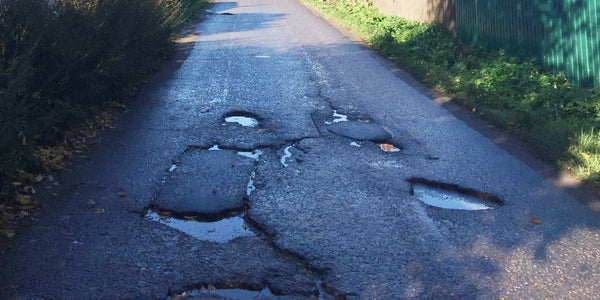
Pothole damage should be measured as a fleet cost
Britain’s deteriorating roads are generating another preventable cost that fl...

Why electric-van trials can fail before the vehicles arrive
Electric-van deployments risk underperforming when fleet and sustainability t...