

Fleet1000 speaks to FleetCheck Founder and CEO Peter Golding on compliance pressure, fleet decision-making and everything being asked of fleet managers today.
"Compliance is central to every fleet operation. The challenge is often getting senior management to recognise just how important it is."

A former vehicle technician turned garage owner and now one of the UK fleet sector’s most established software founders, Peter Golding brings more than four decades of hands-on industry experience. After building and running award-winning garages and vehicle supply businesses, he launched FleetCheck in 2006 to address what he saw as a major gap – helping smaller operators manage fleet compliance, cost and risk without the complexity of enterprise systems.
In this Fleet1000 conversation, Peter explores what it's really like to be a 'many-hat-wearing' fleet manager, the compliance pressures causing decision-paralysis, and how FleetCheck has become a confidant to so many of its clients.
What gap in the market did you identify when you founded FleetCheck 20 years ago and why did you feel it was worth building a business around?
“In the world of fleet today, nobody can sit there confidently saying, ‘I’ve been doing this job for the last 15–20 years and I know what to do.’ You’re having to reskill and relearn the role almost on a monthly basis.
"But going back to 2006, from my motor trade background, I saw a gap in the market. From running garages and working with main dealer groups, it was obvious that a huge sector of the industry was being ignored – fleets of up to around 100 vehicles, maybe a couple of hundred. What you were looking at were operations relying on filing cabinets, spreadsheets and memory, with records scattered.
"A lot of the companies I was supporting while running my garages made me think: what would they do without that level of support? It became clear they were relying heavily on external expertise rather than having proper systems or understanding in place themselves. That’s when I realised there must be thousands of businesses out there who didn’t fully appreciate the importance of managing their fleet properly.
"I was an authorised MOT examiner, with testers working for me, so I came at this from the mechanical side of the business – understanding fleet maintenance and the importance of it. I’ve done many thousands of MOTs in my lifetime, so I know what roadworthiness looks like.
"The sector I identified hasn’t really changed. It was the light vehicle market – particularly vans – that I launched FleetCheck to support. It’s common for a company to be running five or six vehicles, then suddenly gain a contract and grow to 50 or 100. Their core business isn’t managing vehicles – they’re plumbers, builders, whatever they do for a living. My role has been to take that knowledge and build something intuitive and easy to use.
"With the greatest respect to the market, in 2006 and even today there are some incredibly sophisticated software solutions out there, particularly for very large fleets. But with onboarding periods of three to six months just to get data in, I recognised that if I wanted to support smaller fleets, I needed to be able to train them in an hour and do the heavy lifting for them.
"What surprised me early on, when we started partnering with companies like TomTom, now Webfleet, was that they asked us to support larger fleets. I had assumed those fleets had everything sorted, but in reality they were dealing with exactly the same challenges as smaller fleets, just at a much larger scale.
"A few years in, I realised why more people weren’t doing this – it’s incredibly complicated, especially to scale. What we’ve benefited from over the last 20 years is the knowledge gained from working with clients, who have helped shape the product into what it is today.
"I’d love to say the product people use today was my idea. My idea was the catalyst. What we have now is the result of 20 years of evolution – hundreds of thousands of hours of people using it, and us constantly listening and adapting the system to what they want."
What has changed the most in fleet management over the last 20 years and what has stayed the same?
"Fragmentation and the vast amount of data fleet managers must now process has changed. Telematics and tracking have been around for many years, but not to the extent they are now. And when you look at the expectation today, legislatively, you can’t get it wrong. You have a duty of care to manage your fleet.
"Every fleet manager we’ve ever met has a major constraint, which is time. They are always constrained on time. What you have to be able to do is support them in moving from reactive to proactive management. You don’t want to wait until something has gone wrong – you want to pre-empt it.
"Then when you add electrification, you introduce another layer of complexity. It’s not just introducing EVs – it’s maintaining them, managing them, onboarding drivers, training them, dealing with obligations around net zero. These weren’t prevalent 20 years ago.
"There are three reasons why somebody looks at our product. The first is fragmentation – getting a holistic view and moving away from spreadsheets. The second is cost control. When you look at rising fuel costs and operational costs, the only way to manage them effectively is through data. So instead of spending two days a month analysing it, our role is to automate that and provide reporting in minutes.
"The third is compliance. Fundamentally, there is a legal obligation to make sure vehicles and drivers are safe and compliant. Often companies are driven initially by time, data, or cost pressures, but once the board recognises their exposure, compliance becomes the number one issue."
How is the role of compliance evolving, and how should fleets be approaching it going forward?
"So many companies are unaware that all of the advisories given to them are sitting on a central database. When you look at the availability of data that companies have available to them to demonstrate their compliance, it’s significant. You’ve got the Motor Insurance Database, where insurance information has to be updated. Driver licences used to be checked physically, but now it’s all electronic. So, compliance has shifted. The way companies demonstrate it is now about technology rather than paper. I think that’s something businesses must embrace.
"We’re also seeing that fleet operators are dealing with more challenges around prioritisation. Is it about keeping vehicles on the road? Minimising downtime? Driver compliance? Time management? There are competing pressures.
"But fundamentally, they have to know that every vehicle on the road is legal and every driver is fit and legally able to drive. When you look at things like drug driving now overtaking drink driving, these are factors that fleets must respond to by using the data available to them.
"Technology like cameras and telematics gives fleets the ability to defend drivers and monitor behaviour. But the challenge we see is that many fleets adopt the technology and then don’t have the time to properly manage or audit the data.
"So our role is to support them. If there are repeated speeding incidents or complaints, you have to be able to act on that data. You can’t use a lack of time as an excuse. We help present the data in a way that’s easy to interpret and act on.
"I think compliance is central to every fleet operation. The challenge is often getting senior management to recognise just how important it is."
How has your focus on larger fleets shifted in recent years?
"We’ve been working with larger fleets for many years. Some of them have been with us for over a decade. But over the last couple of years especially, more large fleets have been approaching us directly.
"I think some of that comes down to the longevity of our brand.
"What we’ve found is that larger fleets are looking for something that can scale with them. Many of the conversations we have aren’t about replacing competitors directly. Instead, they’re coming to us with legacy systems that aren’t being supported, or where they’ve patched multiple systems together, sometimes after acquisitions.
"So they end up with a lot of complexity.
"Fundamentally, what these fleets are looking for is integration of data. That’s an area we’re particularly strong in. We have APIs that allow them to connect different systems, and we can reduce onboarding time significantly – often getting them live within a few weeks.
"Large fleets often operate in practice as lots of smaller ones. A company might have 1,000 or 2,000 vehicles but spread across 100 depots. So effectively, they’re running 100 smaller fleets. Our role is to support both the head office and the individual depot managers. For example, if a driver reports a defect through our app, that information needs to flow through to central systems.
"The big change over the last six or seven years has been the adoption of mobile technology. Drivers are now using phones to complete walkaround checks – we’ve done close to 35 million of these. That allows larger fleets to get real-time data into a central system and ensure vehicles remain roadworthy."
What different challenges do larger fleets pose compared to smaller operators?
"It’s mainly the complexity of data integration. Larger fleets often need integration with HR systems, multiple telematics providers, and several leasing companies. So, a lot of the work we do is bringing that data together into a single, holistic view. Once that’s in place, they can focus on using the data rather than gathering it.
"Some of the more sophisticated fleets want access to the data via API so they can use it in their own systems. We’ll bring in supplier data through automated feeds, so once they’re onboarded, the process is largely automated. From there, our role is to provide proactive notifications and support.
"For smaller fleets, it might just be reminders about MOTs and servicing. For larger fleets, it’s much more about whole-life cost, advanced analysis, and deeper intelligence."
What are the biggest regulatory challenges facing fleets right now?
"There’s a huge amount of noise around the ZEV mandate at the moment. I’ve said since it was introduced that it would present challenges. Mandating manufacturers to produce vehicles and expecting fleets to follow isn’t necessarily the right approach. What’s needed is more dialogue between government, manufacturers, and fleet operators.
"One of the biggest risks is vehicle supply. If manufacturers face heavy fines, there’s been discussion – particularly from companies like Ford and Stellantis – about reducing the number of vehicles supplied in the UK.
"We’ve already seen supply issues during Covid and the chip shortage. If that happens again, it will compound existing problems.
"I’m a strong advocate for electrification. I drive a hybrid myself, and around 80% of my journeys are electric. But the reality is different depending on the type of fleet.
"So, the concern is that instead of encouraging adoption, policy could push fleets through penalties – higher taxes, fuel costs, or other measures. That’s not necessarily the right way to approach it and there needs to be greater dialogue between government and an industry which is incredibly knowledgeable.
"Yes – there are large fleet operators that have successfully electrified; Royal Mail is a good example of that. But generally, those fleets have vehicles that go back to the depot and charge together at the end of the day. We also need to hear more from small and medium-sized fleets. They probably represent most vehicles on the road, but they’re the least vocal.
"My concern is that, in response to all this, vehicle parcs are simply going to get older."
How are current energy pressures and wider market conditions influencing fleet-decision making?
"You could argue that rising fuel costs would drive electrification, but I don’t think that’s necessarily the case. We’ve seen fuel prices rise before, and it doesn’t always lead to major behavioural change. Electrification such a significant decision that companies don’t react quickly unless the change is extreme.
"What we tend to see instead is companies deferring decisions. Inflation, uncertainty around residual values, and ongoing developments in technology all contribute to that. We saw this in 2020, where fleet ages increased rapidly and leases were extended.
"Companies are very good at waiting to see what happens before committing. And with EVs, there’s still uncertainty – about range, future technology, and long-term value. So what happens is delays in investment, particularly in new vehicles.
"If anything, the current geopolitical situation and energy costs are making companies pause rather than accelerate decisions. Over the next 12 months, I think the market may stagnate, and that could slow the adoption of electrification."
What are your leadership insights from the last two decades at FleetCheck?
"When fleet operators come to us, they often have immediate problems that we can solve quite quickly. Those problems are front of mind for them at the time. But the real insight comes when you build relationships with those companies. What keeps them up at night isn’t always what they initially tell you.
"Once you remove the immediate pains, you can start to understand their deeper concerns. And that only comes from trust.
"Because we’ve worked with so many companies, we’re often able to identify their challenges early on, sometimes even better than they can articulate them themselves. Our real value comes once we’ve solved the initial issues and become a partner in their ongoing operations.
"What have I learnt? Listen to clients. React to what they need. Underpromise and overdeliver.
"In the software world, there are unfortunately some providers offering solutions to problems that don’t necessarily need solving. That has often created an expectation that software providers won’t make fleets feel looked after.
"We pride ourselves on ongoing communication and relationships with every client, regardless of size. That’s where we’ve learnt the most. There’s no shortcut to trust – it comes from longevity. Once you’ve got the trust, you then become a confidant.
"Many fleet managers have multiple roles. They’re not just managing fleet, and sometimes they’re not fully aware of all the risks or complexities. They can be defensive at first, because they don’t want to feel exposed.
"But once they understand that we’re there to help, that we’re the good guys, and that we genuinely recognise their challenges, they often become our strongest advocates."
FleetCheck is a FleetWise Trusted Brand. Find out more about their connected software here.
Similar Stories
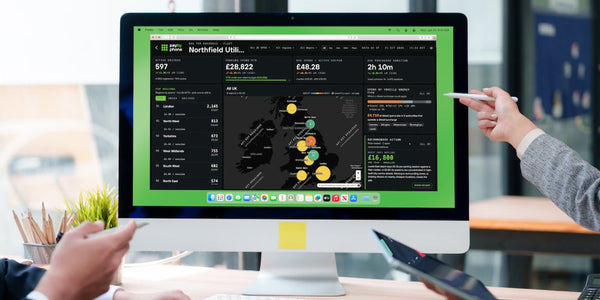
PayByPhone gives fleets live control of parking spend
PayByPhone has launched Mission Control for Business, giving fleet operators ...

Alex Crane-Robinson of Webfleet on data, downtime, and using AI to its potential
Meet Alex Crane-Robinson, Regional Director UK & Ireland at Webfleet. Wit...
Where is your fleet wasting money? Start with this advice from Webfleet’s Alex Crane-Robinson
Most fleets already have enough operational data to uncover meaningful saving...
Small fleets increasingly need access to big-fleet expertise
The Association of Fleet Professionals is offering 50 funded memberships to s...