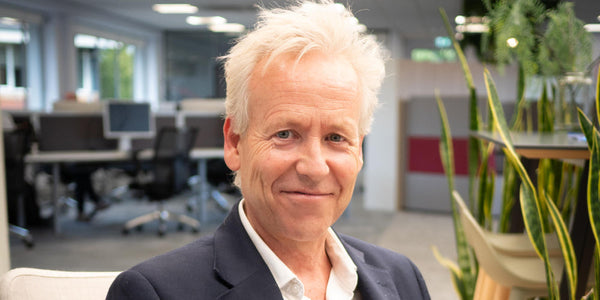


Fleet1000 speaks to Lightfoot Chief Revenue Officer David Savage on scaling fleet technology, why driver engagement is replacing 'Big Brother' telematics, and the behavioural change that will define the next generation of fleet performance.
"The fleets that will succeed won't just enforce compliance; they'll motivate their workforce and prioritise driver wellbeing."
David Savage joined Lightfoot in 2025 as Chief Revenue Officer to lead the company's next phase of commercial growth, bringing more than two decades of experience scaling businesses across the mobility, automotive and telematics sectors. Having held senior leadership positions at FREENOW and Geotab, he now oversees Lightfoot's expansion as the business passes 100,000 connected vehicles and accelerates its international ambitions.
In this Fleet1000 conversation, Savage explains why driver engagement is becoming more valuable than surveillance, how fleets can turn data into lasting behavioural change, and why culture, wellbeing and leadership will become increasingly important as operators balance rising costs, safety priorities and the transition to electric vehicles.

You've held senior leadership roles across mobility, ride-hailing and telematics, so what attracted you to Lightfoot at this stage of your career and what opportunity did you see in the business?
"What attracted me to Lightfoot was the opportunity to help scale a business with a genuinely differentiated product, an innovative technology roadmap, and a culture built around making a real difference. Throughout my career, I've enjoyed transforming commercial organisations in highly competitive markets, and I saw enormous potential to strengthen Lightfoot's go-to-market strategy, accelerate enterprise growth, and unlock even greater value from a product that delivers measurable improvements in safety, efficiency and sustainability.
"Just as importantly, I was drawn to the people and the culture. There's a genuine passion across the business for innovation, collaboration and delivering great customer outcomes. Combining that with my experience in mobility, telematics and commercial transformation has made this an exciting opportunity to help build a stronger, more scalable business while continuing to lead the future of fleet technology."
Lightfoot has surpassed 100,000 connected vehicles and is expanding internationally, so what has driven that growth and where do you see the biggest commercial opportunities over the next few years?
"Hitting 100k connections is a real validation that the market has moved towards driver-centric telematics, rather than pure surveillance or ‘Big Brother’ technology. The growth has been driven by outcomes, not features, fleets that adopt Lightfoot see measurable improvements in driver retention and engagement, and reductions in fuel costs, CO₂ emissions, and wear and tear. When drivers genuinely engage with the system, fleet managers aren't fighting adoption battles, and that strong retention speaks for itself.
"International expansion feels like a natural next step. The core problems we solve are universal, and Lightfoot's proposition translates well across markets. We already have good traction in mainland Europe, and we see the US as a significant opportunity."

Lightfoot has built its reputation around real-time coaching and positive driver engagement rather than traditional 'Big Brother' telematics, so why do you think that approach is resonating with fleets today?
"Fleets are facing a very real driver retention crisis, and anything that treats drivers as the problem rather than the solution only makes that worse. Real-time coaching works because it meets drivers in the moment, not retrospectively. Our data shows an additional 9% uplift in MPG when drivers actively engage with the Lightfoot app which is a really meaningful, quantifiable difference.
There's also a broader cultural shift happening. Mental wellbeing, ESG commitments and duty of care mean companies need to demonstrate they're investing in their people, not simply policing them. Fleets that understand that are the ones getting the best results."
Lightfoot has argued that 'culture will beat compliance', so do you think the fleet industry has become too focused on technology and data at the expense of creating lasting behavioural change?
"Data and behavioural change absolutely can go hand in hand, but right now the industry has an abundance of data and a shortage of actual behaviour change. The fleets that will succeed won't just enforce compliance; they'll motivate their workforce and prioritise driver wellbeing. Lightfoot is deliberately built around that idea: using data not to catch drivers out, but to reward them for smoother, safer driving and create habits that stick."

Looking ahead, what do you see as the biggest challenges and opportunities facing fleet operators over the next 12-24 months, and where can suppliers add the greatest value?
"Cost pressures aren't going away. Fluctuating fuel costs, rising insurance premiums and repair bills will continue to squeeze operators, and efficiency gains at the driver level remain one of the few controllable levers available to them. The EV transition will also continue to dominate conversations, bringing real complexity around range anxiety and charging behaviour that fleets need support navigating.
"Underlying all of that is driver retention. It remains genuinely challenging, and the fleets that invest in driver experience now will have a meaningful competitive advantage, both in attracting people and keeping them."
As driver safety becomes an even greater priority, what conversations are you having with customers around risk, wellbeing and driver engagement, and what are the highest-performing fleets doing differently?
"The most effective conversations we're having are about shifting from incident reporting after the fact to building a proactive risk culture – preparation over reaction. Our team actively engages and educates drivers directly, so it doesn't feel like a top-down command. And increasingly, conversations about mental wellbeing, fatigue and stress are being recognised at board level which is exactly where they should be. Safety isn't just an operational metric anymore; it's a strategic priority."

Having built a reputation for transforming businesses and developing teams, what is the most valuable leadership lesson you've learned during your career?
"The biggest lesson is that sustainable success is always about people first. Strategy, technology and products are important, but it's the quality of your team, the culture you create and the clarity of purpose that ultimately determine whether a business succeeds.
"I've also learned the importance of maintaining a level temperament. In startups and scale-ups, growth is rarely linear – you'll experience incredible highs alongside inevitable setbacks. As a leader, your team takes its cues from you, so staying calm and focused through both success and adversity is what builds real confidence and resilience. My role isn't to react emotionally to every twist and turn, but to provide stability, make thoughtful decisions and create an environment where people feel empowered to do their best work. That's a philosophy I'm passionate about passing on to the next generation of leaders too."