


Of course, fleet growth is good news, but every additional vehicle also creates more drivers, maintenance dates, defects, documents, invoices and compliance activity to manage.
Processes that worked well for 20 vehicles can become increasingly difficult at 50 or 100.
That doesn’t just have to mean more admin. The answer is in recognising where existing processes have reached their limit and redesigning them before growth creates gaps.
One more vehicle creates several processes
Adding a vehicle means much more than adding another registration number to a spreadsheet.
It can create the need for or the result of:
- Vehicle record
- Driver allocation
- Maintenance schedule
- Inspections
- Defects
- Documentation
- Cost reporting
Multiply that across a growing fleet and the administrative workload can increase quickly.
This matters because manual processes often rely on individual people remembering what needs to happen next.
The larger the fleet becomes, the harder that becomes to sustain.
Look for the early warning signs
A manager doesn’t lose control over a growing fleet overnight. There are usually warning signs first.
Perhaps several versions of the vehicle spreadsheet exist. Information is being entered into different systems. Compliance dates are held in individual calendars. Reports take longer to prepare. Or the fleet manager increasingly finds themselves chasing drivers, suppliers and colleagues for information.
None necessarily represents a serious problem alone.
Together, they suggest the operating model is no longer scaling efficiently.
Compliance needs to grow with the fleet
For commercial vehicle operators, growth does not change the fundamental obligation to maintain effective control.
DVSA's Guide to Maintaining Roadworthiness specifically says operators should review and improve maintenance systems when fleet size or the nature of the business is changing. It also confirms that electronic systems can be used for maintenance scheduling, driver defect reporting, inspection records and compliance management.
That makes scalability a compliance consideration as well as an efficiency issue.
If an inspection, defect or maintenance action is currently dependent on someone remembering to update a spreadsheet, ask whether that process would remain reliable with twice as many vehicles.
Growth also creates more owners
More vehicles often mean more drivers, sites, managers and suppliers. That makes responsibility just as important as information.
For every important process, somebody needs to know:
- Who identifies the issue?
- Who takes action?
- Who confirms it has been completed?
- Where is that evidence recorded?
A shared spreadsheet may show that a defect exists. It does not automatically ensure somebody closes it.
Scalable processes connect information with responsibility.
Centralising information can remove pressure
Speedy Hire faced this challenge while managing a large and complex fleet.
Jaama says its transport operation had been dealing with manual processes, fragmented data and significant administrative workloads. Speedy moved fleet, driver, and journey information into its Key2 platform, creating one central system and moving the transport department to a paperless operation.
The important point is not the product itself. It is the principle: as complexity increases, information needs to become easier to control rather than harder.
Giving fleet managers their time back
The subtle cost of manual fleet growth is management attention.
Every hour spent reconciling spreadsheets, checking dates or moving information between systems is an hour unavailable for controlling cost, improving utilisation, supporting drivers or planning replacement.
A scalable fleet therefore needs processes that can absorb additional vehicles without creating the same proportion of additional administration. And increasingly, technology can do more than simply store the information.
The next generation of fleet systems is beginning to automate actions, interrogate data with AI, and identify problems before somebody has to go looking for them.
Read part two in this series to understand how AI and automation can make growing fleets easier to manage.
Similar Stories
Fleet software consolidation continues as Freeway joins Movement Software
Movement Software has acquired UK fleet-maintenance specialist Freeway Fleet ...

Software-defined safety will change how fleets buy vehicles
Volvo Cars is expanding its partnership with NVIDIA to develop future automat...

Mobile battery charging could keep EV plans moving through grid delays
Fleet electrification projects do not always stall because the vehicles are u...

Government unveils tougher rules on private parking charges
Drivers will receive greater protection against unfair private parking charge...

Government targets clocking with tougher action against used car dealers
The UK Government is proposing tougher action against used-car dealers that m...
Success Stories: How Geotab telematics helped save Milk & More a cool £2m
The resulting fuel and energy savings provided a fast return on investment on...

OMODA 4 compact SUV confirmed for UK launch in 2027
Omoda has confirmed its new compact SUV, the Omoda 4, will be available to UK...

iCAUR confirms V27 SUV for UK launch in 2027
Chinese automotive brand iCAUR will make its UK debut in early 2027, with the...

Updated Mazda CX-30 brings new trim and subtle tweaks
Mazda has unveiled its updated 2027 CX-30, with a wider model range, revised ...
Van tool theft costs UK businesses £1.7bn as fleets face costly downtime
Tool theft is causing significant disruption for UK van fleets, with one in f...

Toyota calls for greater flexibility in UK and EU emissions regulations
Toyota has called for more flexible vehicle emissions regulations in the UK a...

New Government data gives fleets another reason to reassess EV-ready routes
The Department for Transport has updated its monthly public EV charging infra...

£2500 grant strengthens the case for compact electric vans
Volvo's new EX30 Cargo has secured eligibility for the Government's Zero Emis...

Lloyds brings Lex Autolease, Tusker and Black Horse together under Lloyds Auto
Lloyds Banking Group is bringing Black Horse, Lex Autolease and Tusker togeth...
Autoglass takes ADAS recalibration mobile to reduce fleet downtime
Autoglass has launched Mobile Recalibration Pro, a new service designed to co...

Google Maps and Waze add live UK fuel prices to help fleets cut forecourt costs
Google has launched live petrol and diesel pricing across Google Maps and Waz...

Public Charging Price Watch: keep an eye on rapid-charging costs
Public charging remains essential for many electric fleets, but new cost comp...

Leapmotor B03 revealed: 242-mile range, arrives 2027
Leapmotor has unveiled the B03, an all-electric B-segment hatchback combining...

Octopus Fleet launches FleetBoost to cut public EV charging costs
Octopus Fleet has launched FleetBoost, a new scheme designed to reduce public...

BMW iX4 unveiled with up to 514-miles of range
BMW has unveiled its new fully-electric iX4, with the Neue Klasse SUV coupe s...

Volkswagen ID. Tiguan unveiled, replaces ID.4 and ID.5
Volkswagen has unveiled the new ID. Tiguan, an all-electric mid-size SUV set ...
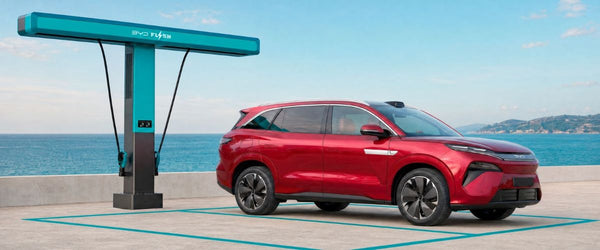
BYD Atto 8 unveiled with Flash charging capabilities, 10-97% in 9 mins
BYD has unveiled its new flagship all-electric SUV, the Atto 8, at the Paris ...

Smart #2 revealed, offering fleets an ultra-compact city runaround
Smart has unveiled its all-electric #2 two-seater at the Paris Motor Show, re...

Better Fleet: Futureproof EV policy by managing rules like an operating system
An EV policy written today will change as charging technology develops, vehic...

Better Fleet: EV adoption is creating policy debt, and exceptions are where it shows first
Most fleet policies were not designed around vehicles that refuel at an emplo...

Citroen 2CV Concept revealed, previewing €15,000 car for urban fleets
Fleets shopping for an affordable, urban city car have a good selection, whic...
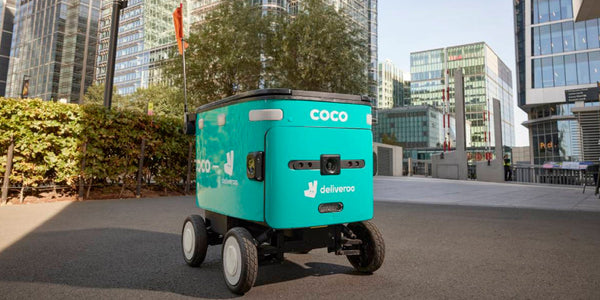
Autonomous delivery starts competing for the shortest commercial journeys
Deliveroo and Coco Robotics are introducing autonomous delivery robots into U...

Electric rigid trucks are becoming a practical regional fleet option
The growing IVECO S-eWay range shows how battery-electric trucks are expandin...

AA puts vehicle downtime at the centre of fleet resilience
The AA has used Fleet & Mobility Live 2026 to launch a new report focused...