


Fleet technology has spent years helping managers record what has happened.
The next stage is helping them decide, or even initiate, what should happen next.
For growing fleets, that matters. If technology can remove repetitive work as vehicle numbers increase, expansion does not necessarily have to mean a proportional increase in fleet administration.
Several of those capabilities are already emerging.
From alerts to automated action
Traditional fleet systems are good at reminders. A service is due. A defect has been reported. A vehicle has generated a warning. The fleet manager then decides what happens next.
Increasingly, workflows can take that process further.
A developing vehicle issue could potentially trigger:
Alert → Maintenance task → Responsible person → Recorded action
The important change is from technology telling somebody that work needs doing towards helping start the work itself.
For growing fleets, that could remove hundreds of small administrative interventions.
Ask the fleet instead of finding the report
AI is also changing how managers access fleet information.
Geotab launched its MCP Connector in June 2026, enabling approved AI tools to securely access live fleet information. Users can ask questions in ordinary language, perform multi-step workflows and take actions using data held within MyGeotab.
The practical potential is significant. Instead of finding and interpreting several reports, a manager could increasingly ask:
- Which vehicles need attention today?
- Which drivers have outstanding actions?
- Where has utilisation fallen?
- Which vehicles are producing unusual costs?
That could make large datasets much more accessible to busy fleet teams.
Compliance is becoming more proactive
Compliance technology is moving in a similar direction.
Samsara launched Smart Compliance in the UK and EU in April 2026, combining tachograph compliance, telematics and AI-based safety information within one system. It is designed to move operators away from managing disconnected systems towards identifying and managing compliance risks through a connected workflow.
This points towards a broader shift. Yesterday's system might record that a compliance problem occurred.
Tomorrow's system should increasingly help identify the risk before it becomes one.
For expanding fleets, that could be particularly valuable because managers cannot manually scrutinise every vehicle and driver every day.
Predictive information will become more useful
The same principle applies to vehicles. Connected fleets already generate significant amounts of diagnostic and utilisation data.
The opportunity is to use that information to identify developing issues earlier.
Instead of waiting for a breakdown or warning light to trigger intervention, predictive systems can increasingly highlight patterns suggesting that maintenance will soon be required.
For the fleet manager, the goal is straightforward: fewer surprises and more planned interventions.
That becomes increasingly valuable as the number of vehicles grows.
Small automations can deliver big gains
Some of the most useful technology will remove very ordinary tasks. Consider something that takes just three minutes but must be completed for every vehicle.
At 20 vehicles, the workload may be manageable. At 500, it becomes significant.
Automatic mileage feeds, digital inspections, document extraction, driver self-service and connected maintenance information can all remove small pieces of administration that become expensive at scale.
That is where automation can create considerable value.
Get today's foundations right first
None of this means fleets should immediately buy the newest AI product. Automation depends on dependable information.
If vehicle records are duplicated, driver information is incomplete or responsibilities are unclear, making the process faster will not necessarily make it better.
The more useful question for fleet managers is:
Are the systems and processes we put in place today capable of taking advantage of better automation tomorrow?
That means creating reliable data, connecting systems where practical and designing clear workflows now.
Futureproofing is all about getting the fundamentals right.
If you missed part one in this series, learn how to keep fleet operations under control as you grow. Or discover the seven ways to scale your fleet without scaling the workload next.
Similar Stories
Fleet software consolidation continues as Freeway joins Movement Software
Movement Software has acquired UK fleet-maintenance specialist Freeway Fleet ...

Software-defined safety will change how fleets buy vehicles
Volvo Cars is expanding its partnership with NVIDIA to develop future automat...
Mobile battery charging could keep EV plans moving through grid delays
Fleet electrification projects do not always stall because the vehicles are u...
Government unveils tougher rules on private parking charges
Drivers will receive greater protection against unfair private parking charge...

Government targets clocking with tougher action against used car dealers
The UK Government is proposing tougher action against used-car dealers that m...
Success Stories: How Geotab telematics helped save Milk & More a cool £2m
The resulting fuel and energy savings provided a fast return on investment on...

5 reasons Telematics are essential for fleets
From live vehicle tracking to predictive maintenance and driver behaviour ana...

OMODA 4 compact SUV confirmed for UK launch in 2027
Omoda has confirmed its new compact SUV, the Omoda 4, will be available to UK...

iCAUR confirms V27 SUV for UK launch in 2027
Chinese automotive brand iCAUR will make its UK debut in early 2027, with the...

Updated Mazda CX-30 brings new trim and subtle tweaks
Mazda has unveiled its updated 2027 CX-30, with a wider model range, revised ...
Van tool theft costs UK businesses £1.7bn as fleets face costly downtime
Tool theft is causing significant disruption for UK van fleets, with one in f...
Toyota calls for greater flexibility in UK and EU emissions regulations
Toyota has called for more flexible vehicle emissions regulations in the UK a...

New Government data gives fleets another reason to reassess EV-ready routes
The Department for Transport has updated its monthly public EV charging infra...
£2500 grant strengthens the case for compact electric vans
Volvo's new EX30 Cargo has secured eligibility for the Government's Zero Emis...

Lloyds brings Lex Autolease, Tusker and Black Horse together under Lloyds Auto
Lloyds Banking Group is bringing Black Horse, Lex Autolease and Tusker togeth...
Autoglass takes ADAS recalibration mobile to reduce fleet downtime
Autoglass has launched Mobile Recalibration Pro, a new service designed to co...

Google Maps and Waze add live UK fuel prices to help fleets cut forecourt costs
Google has launched live petrol and diesel pricing across Google Maps and Waz...
Public Charging Price Watch: keep an eye on rapid-charging costs
Public charging remains essential for many electric fleets, but new cost comp...

Leapmotor B03 revealed: 242-mile range, arrives 2027
Leapmotor has unveiled the B03, an all-electric B-segment hatchback combining...

Octopus Fleet launches FleetBoost to cut public EV charging costs
Octopus Fleet has launched FleetBoost, a new scheme designed to reduce public...

BMW iX4 unveiled with up to 514-miles of range
BMW has unveiled its new fully-electric iX4, with the Neue Klasse SUV coupe s...

Volkswagen ID. Tiguan unveiled, replaces ID.4 and ID.5
Volkswagen has unveiled the new ID. Tiguan, an all-electric mid-size SUV set ...
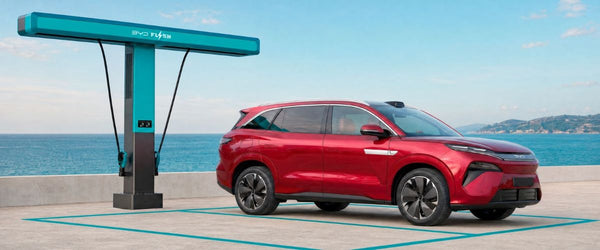
BYD Atto 8 unveiled with Flash charging capabilities, 10-97% in 9 mins
BYD has unveiled its new flagship all-electric SUV, the Atto 8, at the Paris ...

Smart #2 revealed, offering fleets an ultra-compact city runaround
Smart has unveiled its all-electric #2 two-seater at the Paris Motor Show, re...

Better Fleet: Futureproof EV policy by managing rules like an operating system
An EV policy written today will change as charging technology develops, vehic...
Better Fleet: EV adoption is creating policy debt, and exceptions are where it shows first
Most fleet policies were not designed around vehicles that refuel at an emplo...

Citroen 2CV Concept revealed, previewing €15,000 car for urban fleets
Fleets shopping for an affordable, urban city car have a good selection, whic...
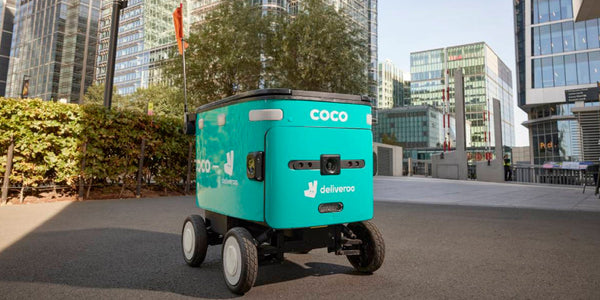
Autonomous delivery starts competing for the shortest commercial journeys
Deliveroo and Coco Robotics are introducing autonomous delivery robots into U...

Electric rigid trucks are becoming a practical regional fleet option
The growing IVECO S-eWay range shows how battery-electric trucks are expandin...

AA puts vehicle downtime at the centre of fleet resilience
The AA has used Fleet & Mobility Live 2026 to launch a new report focused...