


The Autumn Budget 2026 has delivered a mixed package for the fleet industry, offering some immediate relief on fuel costs while raising important questions about the long-term cost of running electric vehicles.
Chancellor John Healey has extended the 5p-per-litre fuel duty cut until July 2027, providing welcome breathing space for businesses facing rising petrol and diesel prices. The Government has also confirmed more generous tax-free business mileage allowances, with the rate for journeys above 10,000 miles increasing to 35p per mile from April 2027.
However, the planned introduction of electric Vehicle Excise Duty (eVED) from April 2028 and rising benefit-in-kind (BiK) rates for electric company cars remain key considerations for fleet managers and drivers.
FleetWise has gathered the opinion of industry experts to analyse specific parts of the 2026 budget.

The impact on fleet electrification
Matt Dale, Director of TZConsultancy, said the budget doesn't 'materially change' fleet electrification policy with little said about 'transport in general'. "It strengthens the economic case for electrification through lower energy costs, industrial competitiveness measures and continued support for electricity affordability."
Dale sees a potential impact for businesses planning to install EV charging points; "The new British Industrial Competitiveness Scheme which will provide a 20-25% discount on electricity to around 10,000 energy intensive manufacturers from April 2027 could be relevant where those businesses have installed or are thinking of installing Depot/office chargers for fleet or employees."
While not specific to fleets, Dale highlights a key EV backing proposal: "The budget document includes the statement 'Cheaper electricity will boost electrification, increasing the UK's energy security and helping to decarbonise the whole economy' which is a significant policy direction and provides stronger government backing for electrification than many recent fiscal statements."

Fuel duty freeze
The RAC has warned that extending the 5p-per-litre fuel duty freeze until July 2027 offers limited relief for drivers facing soaring fuel costs.
RAC senior policy officer Rod Dennis said: “A freeze only avoids making an already difficult situation worse – it doesn’t make filling up any cheaper.” He added that nearly two-thirds of regular drivers surveyed wanted cuts to fuel duty or VAT, with many reducing other spending to cope with high prices.
Dennis also highlighted the cost of public EV charging, where VAT remains at 20%, compared with 0% on domestic electricity in Great Britain.
“Reducing VAT on public charging would have been an obvious way for the Government to make the switch more accessible for more people,” he said, calling for greater affordability for drivers unable to charge at home.
Business mileage allowances increase
The Association of Taxation Technicians (ATT) has welcomed the Government’s decision to increase tax-free business mileage rates, describing the move as the “right road to travel”, while calling for further changes to simplify the system and better reflect vehicle running costs.
Chancellor John Healey confirmed that the 55p-per-mile rate for the first 10,000 business miles will become permanent, while the rate for additional mileage will rise from 25p to 35p per mile. The changes will benefit employees and self-employed people using their own vehicles for work, particularly those covering high annual mileages.
Jon Stride, Chair of the ATT’s Technical Steering Group, said: “Increasing the higher-mileage rate to 35p therefore partly addresses that concern.”
The ATT believes further reform is needed, having proposed a single rate of at least 60p per mile to remove the sharp drop in support after 10,000 miles.
Stride added: “We would also like to see the Government address the rates for motorcycles and bicycles, which were left unchanged earlier this year, and commit to reviewing all approved mileage rates regularly so they do not once again fall significantly behind the costs faced by workers.”

'Many questions remain unanswered'
Philip Northard, Insight Director of Cox Automotive International, said: “It is positive to see today’s budget include a raft of announcements aimed at easing pressure on the cost of living.
"As such, we hope this translates into improved consumer confidence and higher demand in the new and used car markets. It is also positive to see no obvious increase in taxation for buyers and improved support for the electric vehicle industry, but many questions remain unanswered."
Northard said that, despite the additional details of the budget, the shape and outcome of the eVED scheme and ZEV mandate consultation "remains to be seen".
"The true test will be the outcome of the EU-UK Summit, which could bring news of tariffs, Made in Europe, Euro7 and Rules of Origin regulations, and the Bank of England’s interest rate decision next week.”
Similar Stories
Public Charging Price Watch: 55p charging now comes with rewards too
This week’s Price Watch shows how public charging value is increasingly movin...
UK fleet managers still expect an electric future despite policy uncertainty
Confidence in long-term electrification remains high among UK fleet managers ...

Business mileage rates rise as Budget delivers relief for drivers
Employees using their own cars for business travel will benefit from more gen...
£100m Budget fund aims to cut costs at local EV chargers
The Government has announced £100 million of funding to reduce prices at loca...

Autumn Budget 2026: VAT reduction on household electricity extended until July 2027
Electric vehicle drivers who charge at home are set to benefit from an extens...

The Autumn Budget 2026: What fleet operators need to know
The Autumn Budget brings a mixed outlook for fleet operators and company car ...

Autumn budget: 5p fuel duty cut extended to July 2027
Fleet operators and drivers have been given further relief after the Chancell...

Chery unveils new TIGGO 7 and TIGGO X7 SUVs
Chery is preparing to expand its UK SUV line-up with the TIGGO X7, a new, mor...
Uncertainty over BiK rates delays salary sacrifice decisions
Uncertainty over future Benefit-in-Kind (BiK) tax rates is prompting drivers ...
Volvo EX60 production ramp-up delayed as model receives 50,000 orders
Fleets may have to wait longer than anticipated if operators have ordered the...

Changan introduces S05 PHEV to UK market
Chinese car manufacturer, Changan has introduced its first hybrid vehicle to ...
Better Fleet: Make the business case survive the contract
One of the weaknesses in traditional fleet procurement: A supplier may delive...

Fleet software consolidation continues as Freeway joins Movement Software
Movement Software has acquired UK fleet-maintenance specialist Freeway Fleet ...

Software-defined safety will change how fleets buy vehicles
Volvo Cars is expanding its partnership with NVIDIA to develop future automat...
Mobile battery charging could keep EV plans moving through grid delays
Fleet electrification projects do not always stall because the vehicles are u...
Government unveils tougher rules on private parking charges
Drivers will receive greater protection against unfair private parking charge...

Government targets clocking with tougher action against used car dealers
The UK Government is proposing tougher action against used-car dealers that m...
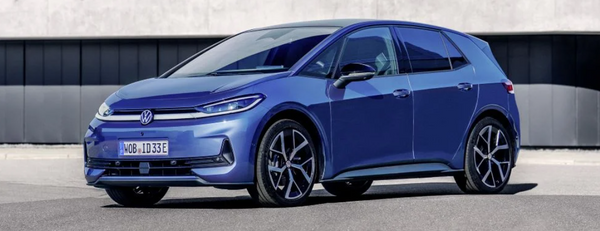
All the cars available with the UK Government's Electric Car Grant
Throughout 2026, the list of electric vehicles (EVs) eligible for the UK Gove...
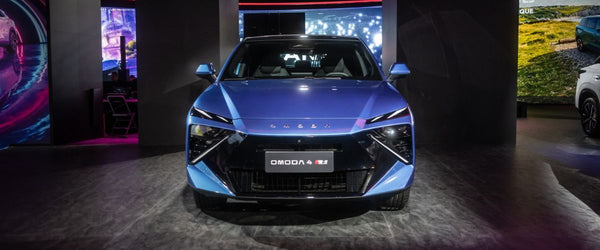
OMODA 4 compact SUV confirmed for UK launch in 2027
Omoda has confirmed its new compact SUV, the Omoda 4, will be available to UK...

iCAUR confirms V27 SUV for UK launch in 2027
Chinese automotive brand iCAUR will make its UK debut in early 2027, with the...

Updated Mazda CX-30 brings new trim and subtle tweaks
Mazda has unveiled its updated 2027 CX-30, with a wider model range, revised ...
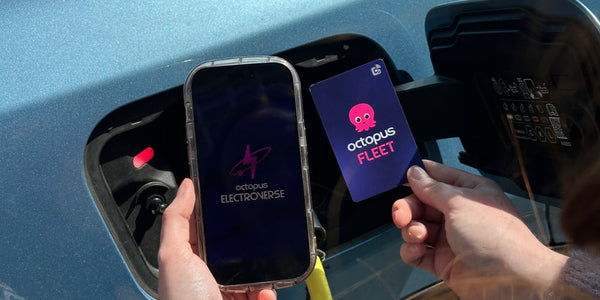
Simplifying fleet electrification starts with smarter integration and less admin
Fleet electrification has transformed the role of the fleet manager, bringing...
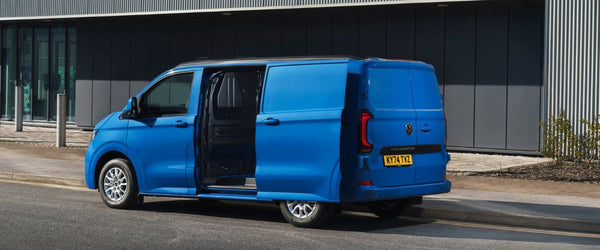
Van tool theft costs UK businesses £1.7bn as fleets face costly downtime
Tool theft is causing significant disruption for UK van fleets, with one in f...
Toyota calls for greater flexibility in UK and EU emissions regulations
Toyota has called for more flexible vehicle emissions regulations in the UK a...

New Government data gives fleets another reason to reassess EV-ready routes
The Department for Transport has updated its monthly public EV charging infra...
£2500 grant strengthens the case for compact electric vans
Volvo's new EX30 Cargo has secured eligibility for the Government's Zero Emis...

Lloyds brings Lex Autolease, Tusker and Black Horse together under Lloyds Auto
Lloyds Banking Group is bringing Black Horse, Lex Autolease and Tusker togeth...