


Useful fleet information should still be useful six months after it was created. You know how easy it is to get inundated with details. It's hard enough to choose from software options in the first place – see what fleet software actually is and how you can get more value from it for some help.
The next complication is deciding on naming conventions and processes that offer clarity for the long-term.
An evergreen data strategy will keep your business from wasting time, effort, and money. It will align staff and ensure that any tech advances you make, bring the biggest benefits to every stakeholder.
This practical check can help make that happen.
1. Create a simple naming rule
Choose a consistent format for commonly stored documents.
For vehicle information, that might be:
Registration → document type → date
For driver information:
Driver → document type → date
The precise format matters less than everybody using the same one.
2. Decide what information travels with every record
Identify the minimum context required to understand important documents later.
Depending on the record, that could include:
- Vehicle registration
- Driver
- Date
- Supplier
- Incident or job reference
- Document type
Think of these details as the labels that allow future users and technology to find the information again.
3. Remove meaningless filenames
Look through a sample of existing records.
Names such as...
- scan0031.pdf
- image004.jpg
- document-final-new.pdf
...They may be obvious when they are created but almost useless later.
Rename important historical documents when they are accessed, rather than attempting to reorganise an entire archive at once.
That gradually improves retrieval without creating a large administration project.
4. Check who can actually retrieve the information
A record can be perfectly organised and still inaccessible.
Test whether the people who genuinely need information can reach it without borrowing somebody else's login, requesting an email attachment or waiting for another department.
Equally, make sure sensitive information isn't available more widely than necessary.
Good retrieval means easy for the right person, not easy for everybody.
5. Decide what happens to old information
Archives become difficult to navigate when everything is kept indefinitely without structure.
Apply your organisation's legal, contractual and data-retention requirements, but distinguish between information that still has operational value and records that no longer need to sit in everyday working locations.
A cleaner active information set makes retrieval easier.
6. Run a retrieval drill
Every quarter, choose several genuine historic queries.
For example:
- Find the supporting information for a repair completed nine months ago.
- Retrieve all relevant records relating to an old incident.
- Find the documentation behind a previous vehicle recharge or cost dispute.
- Then ask someone who wasn't originally involved to locate it.
Any point where they become stuck exposes a retrieval weakness.
7. Add retrievability to future procurement
When considering new software or suppliers, don't only ask what information the platform can collect.
Ask:
How easily can we find it later?
And:
Can we take our information with us in a usable form?
Those questions may become increasingly important as fleet technology evolves.
Aim for information that outlives the process
Good retrieval doesn't require fleets to reorganise everything overnight.
Start by making newly created information easier to recognise, adding useful context and testing whether other people can find it.
Over time, that creates something much more valuable than a large digital archive.
It creates fleet knowledge that stays accessible when it is needed.
If you missed them, read how to make fleet information easier to retrieve by making it easier to recognise and could the future be searching across your fleet systems without replacing them?
Similar Stories

All-electric Kia PV7 unveiled | 286-mile range and 1,200kg payload
Kia has unveiled its new PV7 electric van, which gives fleets a longer, more ...

Volvo XC40, EX40 and EC40 facelifts unveiled
Volvo has unveiled the facelift versions of its XC40, EX40 and EC40 models, w...

BYD launches Approved Repair network, strengthening aftersales support
Chinese car giant, BYD has launched a 138 strong network of Approved Repair c...

Better Fleet: Could the future be searching across your fleet systems without replacing them?
Fleet technology has traditionally presented businesses with two choices: Lea...

Better Fleet: Make fleet information easier to retrieve by making it easier to recognise
Having a record and being able to find it are two different things. A fleet m...

Public Charging Price Watch: Lidl cuts rapid charging to 59p/kWh
Lidl has reduced rapid EV charging to 59p/kWh for Lidl Plus users, down from ...

AA/Toyota Mythbuster Rally proves long-range viability of EVs
The AA and Toyota are taking part in a 1850-mile EV Mythbusters Rally across ...

Success Story: what fleets can learn from Greencore’s 191-van transformation
Greencore is nearing completion of a 191-vehicle urban delivery-van renewal p...

Motorway charging growth increasingly depends on the grid behind it
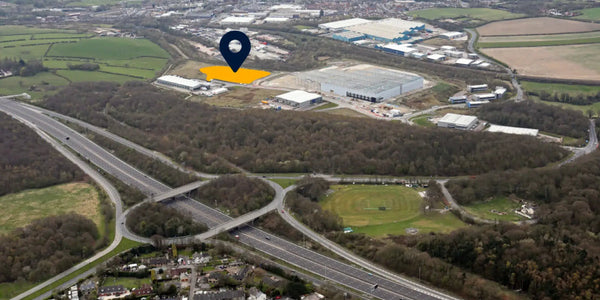
New commercial energy hub gives fleets more than one route to decarbonisation
Construction has started on a new Sheffield energy hub designed specifically ...
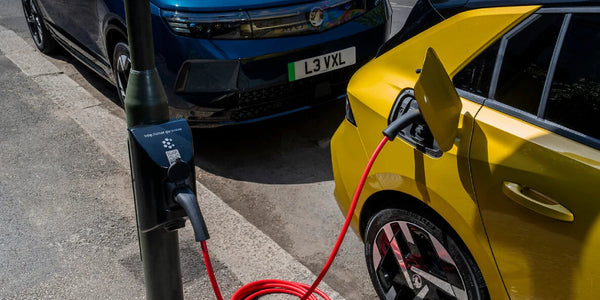
On-street charging gap remains a challenge fleets cannot solve alone

Battery-buffered charging offers workaround where grid connections are weak
SP Energy Networks is expanding battery-buffered EV charging across three ope...

Skoda Karoq SUV gains range-topping Black Edition
Skoda is expanding its Karoq SUV range with a new Black Edition, which become...
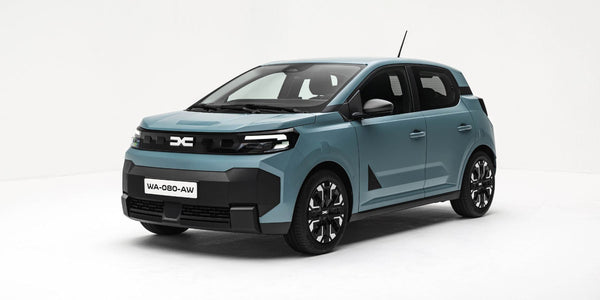
Dacia Spring unveiled - and it's secretly a Renault Twingo
Affordable EV superminis are popular with fleets looking to manage their cost...
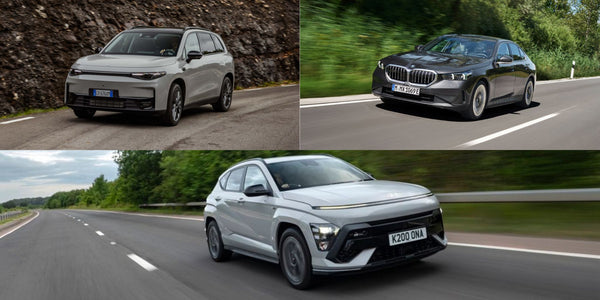
Business lease deals of the week: hybrids to go all the way
This week, we've picked out three excellent lease deals on hybrid vehicles to...

Kia adds performance GT trim to EV3, EV4 and EV5
Kia has expanded its GT trim line portfolio by adding it to three electric mo...

Audi A2 e-tron unveiled with 401-mile range and £32k starting price
Fleets shopping for a practical lower medium EV have a brand new option, the ...
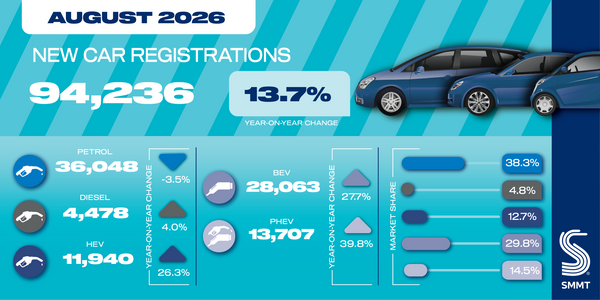
Fleet registrations take 57% market share in August, but September will be 'real acid test' says SMMT
New car registrations grew by 13.7% in August 2026 with fleets taking a 57.2%...

Xpeng sets up own UK retail network ahead of two new model launches
Chinese car maker, Xpeng has moved its UK sales operations in-house, moving a...

Business lease shortlist: four electrified cars worth comparing

Tomorrow’s company-car drivers may arrive expecting an EV

AI fleet systems are starting to recommend the next action

Small fleets should expect simpler mobility payments

Autonomous fleet operations move from UK plans to passenger journeys
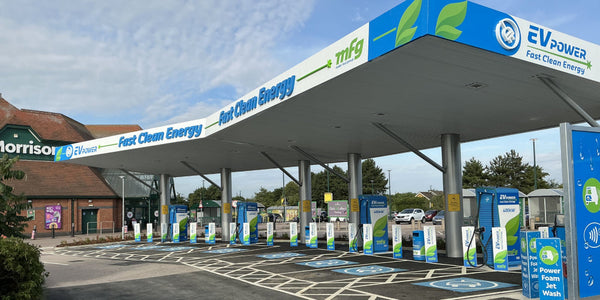
59p/kWh rapid charging offers fleets a September saving

EV charging could start earning fleets money

New HMRC mileage rates are live – check reimbursement settings now

Polestar 4 SUV unveiled, adding practicality to stylish EV
Fleets that enjoyed the Polestar 4 now have the option of a more practical ve...

All-electric Range Rover finally lifts covers
Fleets looking for a Range Rover-style SUV with a full EV powertrain had plen...

Seven in 10 UK tradespeople considering switch to electric vans, study finds
More than seven in 10 UK tradespeople are considering switching to an electri...

Kia PV7 electric van teased ahead of reveal at IAA Transportation show
The Kia PV7 has been teased ahead of its official unveiling at the IAA Transp...

UK pricing announced for Mazda CX-6e electric SUV
Mazda has revealed UK pricing and specifications for its new all-electric CX-...

Business lease deals of the week: small but practical
Small cars that are easy to park, affordable to run, yet boast good practical...

Updated Toyota Yaris Cross goes on sale, priced from £27,445
Toyota has refreshed its popular Yaris Cross, with the updated compact SUV no...

BMW exceeds two-million electric vehicle sales
The BMW Group has just sold its two-millionth electric vehicle (EV), marking ...

Fleets gain confidence in Chinese EVs as affordability and AI become key drivers
Acceptance and fleet desirability for Chinese EVs has grown as affordability,...

Better Fleet: Seven ways to scale your fleet without scaling the workload

Better Fleet: How AI and automation can make growing fleets easier to manage

Better Fleet: How to keep fleet operations under control as you grow

UK pricing announced for flagship Audi Q9 SUV
The UK price of the Audi Q9 has been revealed, starting from £103,900 for the...
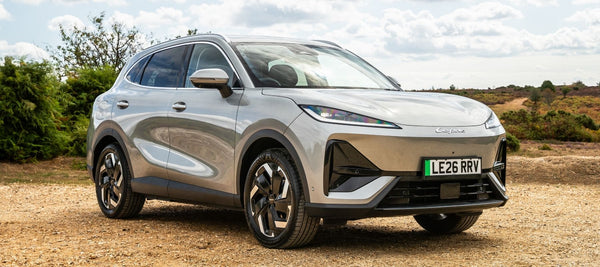
Lepas L6 EV lands in UK to sit alongside Jaecoo and Omoda
Chinese brand, Lepas is launching a second car for the UK market, called the ...
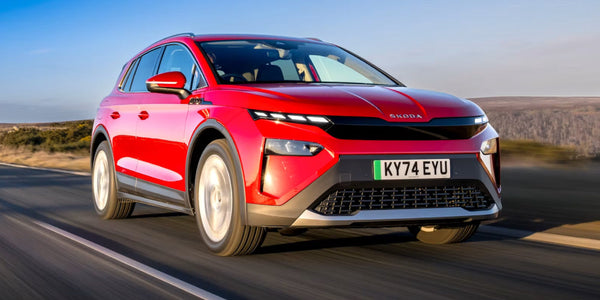
Business lease shortlist: four fleet-friendly cars worth comparing

Electrified vehicle production grows despite pressure on UK manufacturing

88% of van fleets now want external help with electrification

Could wider 20mph limits change fleet journey planning?