


Fleet technology has traditionally presented businesses with two choices.
Leave information in different systems and search each one separately, or integrate and consolidate those systems so more information can be viewed together.
Emerging technology could increasingly offer another option.
Search across information without necessarily moving all of it first.
If you missed it, find out how to make fleet information easier to retrieve by making it easier to recognise.
From centralising data to connecting knowledge
Imagine a fleet manager investigating a vehicle.
Its service records may sit with a maintenance platform. Telematics information could be elsewhere. Leasing documents, invoices and incident information may all have different homes. Already, AI fleet systems are starting to recommend the next action for fleet managers, but if they don’t have the data, that suggestion will be misinformed.
Today, finding the complete history can mean visiting several systems.
Future retrieval technology could increasingly create a layer across those sources, locating relevant information while leaving the original records where they belong.
That could change the conversation around fleet integration.
Meaning could become more important than location
Traditional search usually relies on knowing what something is called or where it was stored.
More advanced retrieval technology can increasingly identify information by context.
Instead of searching for an exact filename, users could potentially look for:
repairs involving the nearside front wheel on this vehicle
or
documents connected with the collision involving this driver last November.
The significant change is that the user may no longer need to know the terminology used when the information was originally recorded.
That creates new questions for fleet suppliers
As retrieval capabilities develop, fleet managers should start looking beyond the number of reports available within a platform.
Useful futureproofing questions include:
- Can information be accessed securely by other authorised systems?
- Are records properly structured and identifiable?
- Can documents retain useful metadata when exported?
- Can access permissions follow the information?
- Can the business retrieve its information if it changes provider?
Those capabilities could become increasingly important as fleets build technology around multiple specialist systems.
Permissions will matter as much as search
Making information easier to find must not mean making everything visible to everybody.
Driver records, incident information and commercially sensitive data may require very different access controls.
Future retrieval tools will therefore need to understand not just what information exists, but who is entitled to see it.
For fleet managers, good information governance becomes part of futureproofing.
Don't build tomorrow's inaccessible archive
Nobody knows exactly what the fleet interface of five years' time will look like, but one principle is increasingly useful today...
Avoid creating information that can only be understood or accessed inside one narrow workflow.
Well-structured, identifiable and portable records give future technology more to work with.
The next leap in fleet data may not simply be gathering everything into a bigger database.
It could be making everything you are authorised to know retrievable from wherever it already lives.
With that in mind, take a look at your practical playbook for making fleet records easier to retrieve.
Similar Stories
All-electric Kia PV7 unveiled | 286-mile range and 1,200kg payload
Kia has unveiled its new PV7 electric van, which gives fleets a longer, more ...

Volvo XC40, EX40 and EC40 facelifts unveiled
Volvo has unveiled the facelift versions of its XC40, EX40 and EC40 models, w...

BYD launches Approved Repair network, strengthening aftersales support
Chinese car giant, BYD has launched a 138 strong network of Approved Repair c...

Better Fleet: Your practical playbook for making fleet records easier to retrieve
Useful fleet information should still be useful six months after it was creat...

Better Fleet: Make fleet information easier to retrieve by making it easier to recognise
Having a record and being able to find it are two different things. A fleet m...

Public Charging Price Watch: Lidl cuts rapid charging to 59p/kWh
Lidl has reduced rapid EV charging to 59p/kWh for Lidl Plus users, down from ...

AA/Toyota Mythbuster Rally proves long-range viability of EVs
The AA and Toyota are taking part in a 1850-mile EV Mythbusters Rally across ...

Success Story: what fleets can learn from Greencore’s 191-van transformation
Greencore is nearing completion of a 191-vehicle urban delivery-van renewal p...

Motorway charging growth increasingly depends on the grid behind it
New commercial energy hub gives fleets more than one route to decarbonisation
Construction has started on a new Sheffield energy hub designed specifically ...
On-street charging gap remains a challenge fleets cannot solve alone
Battery-buffered charging offers workaround where grid connections are weak
SP Energy Networks is expanding battery-buffered EV charging across three ope...
Skoda Karoq SUV gains range-topping Black Edition
Skoda is expanding its Karoq SUV range with a new Black Edition, which become...
Dacia Spring unveiled - and it's secretly a Renault Twingo
Affordable EV superminis are popular with fleets looking to manage their cost...
Business lease deals of the week: hybrids to go all the way
This week, we've picked out three excellent lease deals on hybrid vehicles to...

Kia adds performance GT trim to EV3, EV4 and EV5
Kia has expanded its GT trim line portfolio by adding it to three electric mo...

Audi A2 e-tron unveiled with 401-mile range and £32k starting price
Fleets shopping for a practical lower medium EV have a brand new option, the ...
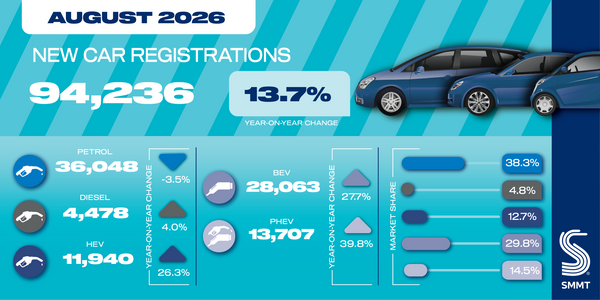
Fleet registrations take 57% market share in August, but September will be 'real acid test' says SMMT
New car registrations grew by 13.7% in August 2026 with fleets taking a 57.2%...

Xpeng sets up own UK retail network ahead of two new model launches
Chinese car maker, Xpeng has moved its UK sales operations in-house, moving a...

Business lease shortlist: four electrified cars worth comparing

Tomorrow’s company-car drivers may arrive expecting an EV

AI fleet systems are starting to recommend the next action

Small fleets should expect simpler mobility payments
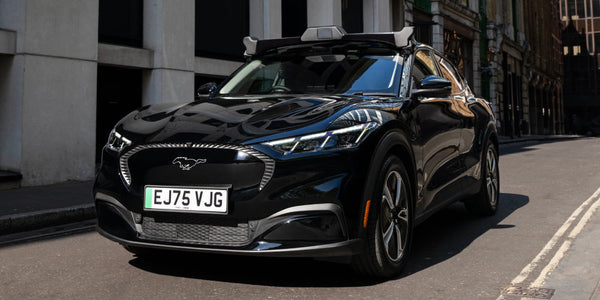
Autonomous fleet operations move from UK plans to passenger journeys
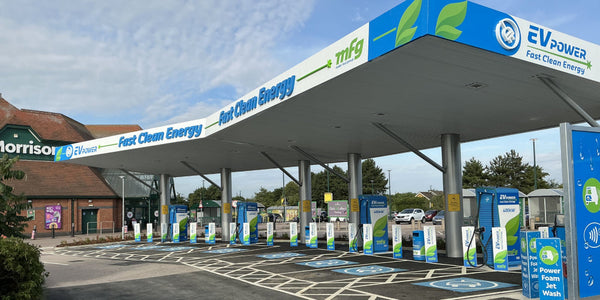
59p/kWh rapid charging offers fleets a September saving

EV charging could start earning fleets money

New HMRC mileage rates are live – check reimbursement settings now

Polestar 4 SUV unveiled, adding practicality to stylish EV
Fleets that enjoyed the Polestar 4 now have the option of a more practical ve...

All-electric Range Rover finally lifts covers
Fleets looking for a Range Rover-style SUV with a full EV powertrain had plen...

Seven in 10 UK tradespeople considering switch to electric vans, study finds
More than seven in 10 UK tradespeople are considering switching to an electri...

Kia PV7 electric van teased ahead of reveal at IAA Transportation show
The Kia PV7 has been teased ahead of its official unveiling at the IAA Transp...
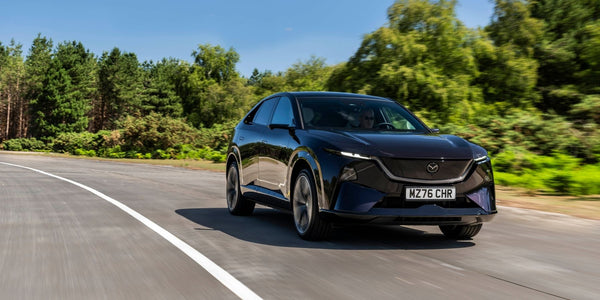
UK pricing announced for Mazda CX-6e electric SUV
Mazda has revealed UK pricing and specifications for its new all-electric CX-...
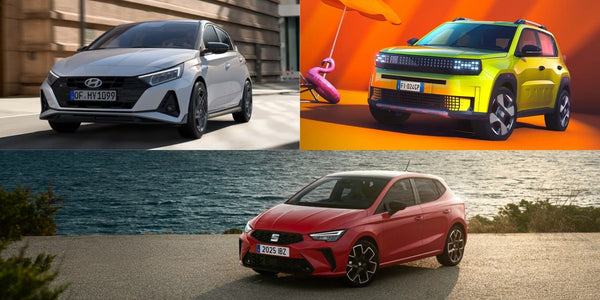
Business lease deals of the week: small but practical
Small cars that are easy to park, affordable to run, yet boast good practical...

Updated Toyota Yaris Cross goes on sale, priced from £27,445
Toyota has refreshed its popular Yaris Cross, with the updated compact SUV no...

BMW exceeds two-million electric vehicle sales
The BMW Group has just sold its two-millionth electric vehicle (EV), marking ...

Fleets gain confidence in Chinese EVs as affordability and AI become key drivers
Acceptance and fleet desirability for Chinese EVs has grown as affordability,...

Better Fleet: Seven ways to scale your fleet without scaling the workload

Better Fleet: How AI and automation can make growing fleets easier to manage

Better Fleet: How to keep fleet operations under control as you grow

UK pricing announced for flagship Audi Q9 SUV
The UK price of the Audi Q9 has been revealed, starting from £103,900 for the...
Lepas L6 EV lands in UK to sit alongside Jaecoo and Omoda
Chinese brand, Lepas is launching a second car for the UK market, called the ...
Business lease shortlist: four fleet-friendly cars worth comparing

Electrified vehicle production grows despite pressure on UK manufacturing

88% of van fleets now want external help with electrification

Could wider 20mph limits change fleet journey planning?