

Long journeys are often the first work fleets protect from electrification, and that can be sensible.
It can also become an assumption that survives long after vehicle capability, charging infrastructure or operating experience has changed.
Instead of classifying routes simply as EV or non-EV, fleets can build a more useful route-risk model.
The objective is to identify which duties genuinely require another powertrain, and which simply require better allocation.
Step 1: Measure energy intensity, not just distance
Start with comparable completed duties and establish how much energy they consume.
A useful measure is:
kWh per mile or kilometre by route type
Then segment the results.
Motorway-heavy work may perform differently from urban operation. Loaded vehicles may behave differently from lightly laden ones. Auxiliary equipment can create another distinct category.
The aim is to understand the energy requirement of the work itself.
That allows fleet managers to ask whether a particular vehicle has sufficient usable energy rather than relying on a generic range number.
Step 2: Understand variability
Two routes with the same average energy use can represent very different risks.
Route A might consistently consume between 55% and 60% of the battery.
Route B might average 58% but occasionally consume 80%.
Those routes should not be treated identically.
Look at:
- Normal consumption
- Higher-percentile consumption
- Seasonal change
- Exceptional high-energy journeys
- Unexplained deviations
The variability tells you how much margin is actually required.
Step 3: Separate energy risk from recovery risk
Now ask what happens if conditions deteriorate.
Does the route pass reliable charging locations?
Could charging take place during an existing driver break?
Would using one add 10 minutes or 45?
Can another vehicle absorb the work if there is disruption?
A route with tight energy margins but excellent contingency may be operationally stronger than one with greater theoretical range but no recovery options.
Treat energy requirement and recoverability as separate measures.
Step 4: Add service criticality
Not every route deserves the same tolerance for risk.
A low-priority internal movement and a time-critical customer response should not automatically operate to the same reserve threshold.
Assign routes a service-criticality rating.
Then combine:
Energy margin + variability + recovery options + service consequence
This creates a much more useful operational risk profile.
Step 5: Grade duties rather than banning them
The result could be a simple allocation structure.
Routine EV duty
Strong energy margin, predictable consumption and manageable consequences.
Allocate normally.
Conditional EV duty
Suitable when state of charge, weather, payload or charging conditions meet defined thresholds.
The route is not inherently unsuitable — it simply requires a pre-dispatch check.
Managed long-range duty
Higher energy requirement, but viable with an identified charging or dwell strategy.
Allocate only to appropriate vehicles.
Exception duty
Energy demand or operational consequence currently makes electric allocation impractical.
Retain another powertrain or alternative solution for now.
This approach prevents the hardest 5% of journeys dictating the vehicle choice for the other 95%.
Step 6: Review the boundaries
A route classified as an exception today should not necessarily remain one indefinitely.
Review the model when:
- New vehicles enter the fleet
- Battery capability changes
- Charging infrastructure improves
- New public charging opens
- Route patterns change
- Operating experience provides better energy data
FleetWise has already highlighted that long-distance capability and charging infrastructure are improving on multiple occasions.
The important management response is therefore to make route classifications dynamic rather than permanent.
Step 7: Measure allocation quality
Once the framework is operating, track more than whether vehicles completed their work.
Useful measures could include:
EV completion rate
Percentage of allocated EV duties completed without unplanned charging or reallocation.
Average dispatch reserve
How much usable battery remains when vehicles finish their duty.
An extremely high figure may indicate excessive conservatism.
Exception rate
How often an apparently viable duty exceeds its expected energy requirement.
ICE substitution rate
How often a combustion vehicle is used because no EV meets the required allocation threshold.
Electric opportunity rate
Journeys completed by ICE that historical data suggests an available EV could safely have performed.
These measures show whether the fleet is genuinely pushing electrification to its sensible operating limit.
Make the difficult routes prove they are difficult
Long-distance work should not be electrified simply to meet a target.
Equally, it should not be permanently excluded because of an assumption made two years ago.
The more mature approach is to make every route demonstrate its operational requirements, quantify the risk and allocate the vehicle accordingly.
That changes range from a barrier into a constraint that can be managed.
And for many fleets, the next stage of electrification may not come from buying a vehicle with another 50 miles of headline range.
It may come from becoming much better at deciding which vehicle should perform which job.
If you landed on this page, make sure to check out parts one and two of this Better Fleet series.
Stop asking about range and ask about operational margin and why vehicle allocation could become a live optimisation decision.
Similar Stories

Better Fleet: Why vehicle allocation could become a live optimisation decision
How could vehicle allocation become dynamic across the entire fleet? The bigg...

Better Fleet: Stop asking about range and ask about operational margin
How should an experienced fleet manager quantify whether one vehicle is suita...

Public Charging Price Watch: off-peak tariffs widen the savings gap
Fleet managers willing to plan where and when drivers charge can now cut publ...
London tunnel charges have changed – check fleet systems now
Charges for using the Blackwall and Silvertown tunnels changed on 21 Septembe...
Young-driver EV demand strengthens the case for policy certainty
New E.ON Next research shows younger drivers are increasingly treating electr...
Smarter grid connections could accelerate the next wave of rapid charging
GRIDSERVE and Extra have opened a new 24-bay ultra-rapid charging hub at Cobh...
Business lease shortlist: four electrified cars for different fleet roles
This week's business lease shortlist covers a value-focused EV hatchback, a s...

Could your fleet be owed money from the £56m vehicle-shipping settlement?
Fleet operators that bought or leased new vehicles between October 2006 and S...

EVs now account for more than a quarter of new UK car registrations
Fresh Department for Transport data shows zero-emission vehicles continuing t...

Nissan X-Trail unveiled as U.S-market Rogue, UK arrival by 2028
Nissan has unveiled its next-generation X-Trail, with the new SUV set to brin...

High-mileage EVs have better MOT pass rates than petrol cars, study finds
New research shows that EVs are less likely to fail an MOT than petrol equiva...

Renault 5 gains more range and clever tech in mid-life update
The Renault 5 E-Tech has been treated to a series of efficiency, technology a...

Fuel prices 'to keep on rising', says RAC as diesel averages nearly £2 per litre
The latest fuel price figures show that the average price of petrol in the UK...
Business lease deals of the week: small SUVs to do it all
We've sourced three great business lease deals on small SUVs. See why they're...

Production spec Renault Trafic E-Tech revealed - arrives in the UK in 2027
The production variant of the Renault Trafic E-Tech has been revealed at the ...

Electric Ford Transit City now available with chassis cab
Ford has unveiled the new Transit City chassis cab, representing Ford Pro’s f...

Omoda & Jaecoo steps up RAC partnership with dedicated repair support
Omoda & Jaecoo's UK operation has expanded its partnership with the RAC i...

Nissan Kicks coming to UK - and it'll be built in Sunderland
Nissan is investing £170m to build a new model in its UK Sunderland plant. Me...

Business lease shortlist: four EVs worth comparing below £350 a month
Electric fleet choice is broadening quickly, and current lease pricing shows ...
Megawatt charging is starting to fit around HGV rest periods
Electric truck charging is beginning to align more closely with the working p...

One charging record could simplify home, depot and public EV costs
Paua and Zaptec have partnered to bring home, workplace, depot and public cha...

BYD brings Chinese competition to Europe’s electric-truck market
Chinese manufacturer BYD plans to introduce its first heavy-duty truck in Eur...
Hydrogen’s 95% value loss highlights whole-life cost risk
A fleet of Aberdeen hydrogen buses is providing a striking reminder that emer...
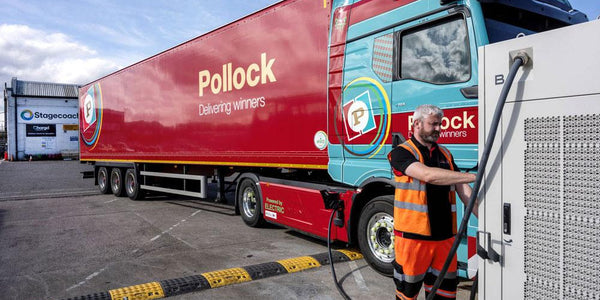
Shared depot charging unlocks a 320-mile electric HGV route
Gregory Group is using Stagecoach’s Inverness bus depot to charge electric HG...

Public Charging Price Watch: how much should fleets really be paying?
The UK average for PAYG rapid and ultra-rapid charging currently stands at ar...
Home charging gets easier for drivers without driveways
A key barrier to home EV charging is being reduced, with the Government confi...
Used EV values rise in August, but September registrations could apply pressure
Used electric vehicle values continued a period of recovery in August, with t...

Chery to expand its UK lineup with four new and refreshed models
Chinese car manufacturer, Chery is set to expand its UK lineup with four new ...

Volvo XC60 and XC90 SUVs given huge EV range boost
Volvo has given the XC60 and XC90 plug-in hybrid models a significant battery...

Volkswagen Amarok Dark Label Special Edition added to UK line-up
Volkswagen has opened UK order books for a new version of its pickup truck; c...
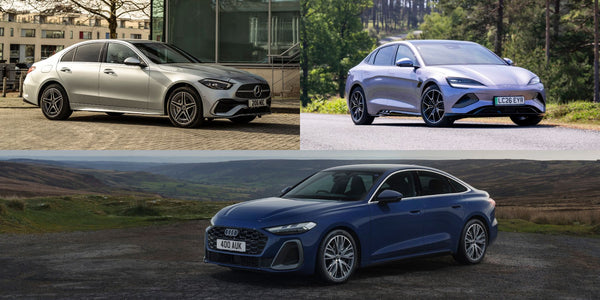
Business lease deals of the week: executive practicality
This week, we've found three top business lease deals on three executive cars...

Another one? Chinese brand, Li Auto eyes up European market with i6 SUV
Chinese premium car manufacturer, Li Auto is preparing to expand into Europe,...
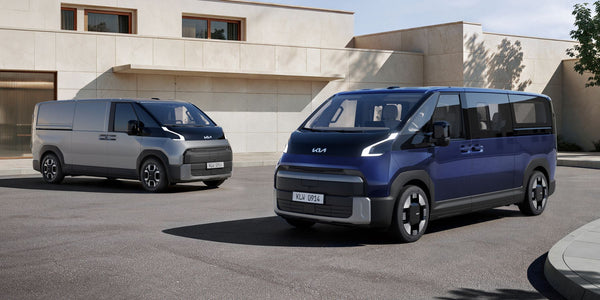
All-electric Kia PV7 unveiled | 286-mile range and 1,200kg payload
Kia has unveiled its new PV7 electric van, which gives fleets a longer, more ...

Volvo XC40, EX40 and EC40 facelifts unveiled
Volvo has unveiled the facelift versions of its XC40, EX40 and EC40 models, w...

BYD launches Approved Repair network, strengthening aftersales support
Chinese car giant, BYD has launched a 138 strong network of Approved Repair c...

Better Fleet: Your practical playbook for making fleet records easier to retrieve
Useful fleet information should still be useful six months after it was creat...
Better Fleet: Could the future be searching across your fleet systems without replacing them?
Fleet technology has traditionally presented businesses with two choices: Lea...

Better Fleet: Make fleet information easier to retrieve by making it easier to recognise
Having a record and being able to find it are two different things. A fleet m...
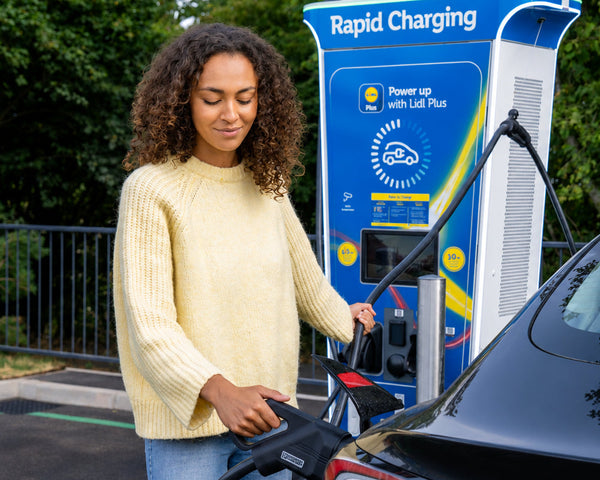
Public Charging Price Watch: Lidl cuts rapid charging to 59p/kWh
Lidl has reduced rapid EV charging to 59p/kWh for Lidl Plus users, down from ...
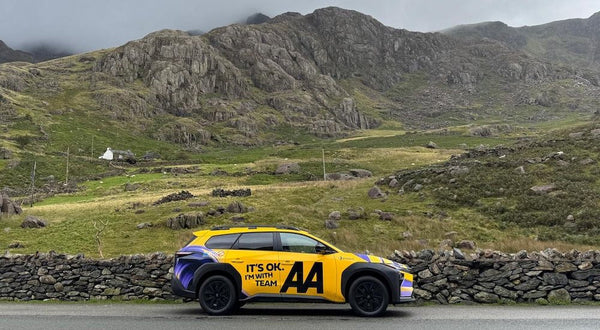
AA/Toyota Mythbuster Rally proves long-range viability of EVs
The AA and Toyota are taking part in a 1850-mile EV Mythbusters Rally across ...

Success Story: what fleets can learn from Greencore’s 191-van transformation
Greencore is nearing completion of a 191-vehicle urban delivery-van renewal p...

Motorway charging growth increasingly depends on the grid behind it

New commercial energy hub gives fleets more than one route to decarbonisation
Construction has started on a new Sheffield energy hub designed specifically ...