

Most fleets still allocate vehicles much as they always have.
A vehicle is available. A driver needs it. A route is assigned.
Electrification introduces another variable: energy.
But the bigger change may come when fleets stop treating allocation as a fixed morning decision and begin continually matching vehicles to work as operational conditions change.
The best vehicle at 6am may not be the best vehicle at 11am
Consider a mixed fleet of electric and combustion vehicles.
At the start of the day, an EV may appear the obvious choice for a 120-mile duty.
Then:
- An earlier job overruns
- Traffic increases
- Its charge finishes later than expected
- A higher-priority journey is added
- Another EV returns with more charge than anticipated
- A public charger on the planned route becomes unavailable
The optimum allocation has changed.
Yet unless the dispatcher has visibility across vehicles, routes and charging, the original plan may simply continue.
That is where more dynamic fleet orchestration becomes valuable.
Bring four layers of information together
A future allocation engine could continuously assess four things.
1. What work needs doing?
Distance is only one element.
It could also understand delivery windows, route type, payload, destination, dwell time, required equipment and the operational importance of the job.
2. What can each vehicle realistically do?
That means more than the vehicle model's quoted range.
The system could use live state of charge, recent energy efficiency, usable battery capacity, current location and vehicle configuration.
A vehicle that has become less efficient on certain duties should gradually be allocated differently.
3. What energy will be available next?
Charging becomes part of dispatch.
A vehicle at 45% SOC now may be a better candidate for an afternoon job than one currently at 70% if the first vehicle has a guaranteed two-hour charging window beforehand.
Conversely, an EV needed for tomorrow morning's hardest route may need to be protected from a late additional job today.
4. What happens afterwards?
This is one of the biggest differences between simple route planning and fleet optimisation.
The best vehicle for the current job is not necessarily the best vehicle for the fleet.
Allocating a long-range EV to an easy local journey could leave only a short-range vehicle available when an unexpected 180-mile requirement arrives.
Optimisation therefore needs to consider the next job as well as the current one.
Charging can become part of scheduling, not a separate activity
This is where electrification changes the operating model.
A fleet could increasingly schedule:
Job → vehicle → remaining SOC → charging slot → next job
as one connected process.
For example, three vehicles might return simultaneously with 35%, 45% and 55% charge.
The traditional response could be to charge whichever plugs in first.
A smarter system would know tomorrow's schedule and prioritise the vehicle that needs the most energy for its next duty.
That reduces the need to maximise every vehicle's state of charge.
The aim becomes having the right energy in the right asset at the right time.
Mixed fleets make optimisation more valuable
This capability also provides a more intelligent route into electrification.
Instead of dividing work permanently into “EV routes” and “diesel routes”, fleets could allocate powertrains according to the actual requirement on the day.
EVs could capture as much suitable work as possible while ICE vehicles deal with the genuinely difficult exceptions.
As vehicle capability and charging infrastructure improve, the proportion assigned to electric can increase without rewriting the entire operating model.
That may prove particularly useful for longer-distance operations where variability — rather than absolute mileage — is the real barrier.
The next fleet KPI could be electric opportunity lost
Dynamic allocation also creates a useful new question:
How many journeys completed by an ICE vehicle could actually have been completed by an available EV?
That matters because an underused EV can weaken the electrification business case just as surely as an unsuitable EV can disrupt operations.
If an electric van remains at the depot while a diesel van completes a suitable route because dispatchers lack confidence or information, the fleet loses potential energy savings and zero-emission mileage.
Over time, measuring those missed opportunities could expose where vehicle allocation — rather than vehicle capability — is holding electrification back.
From route planning to fleet orchestration
EV adoption is often discussed as a vehicle-selection challenge.
Increasingly, it will also be an allocation challenge.
The most advanced fleets may ultimately stop asking:
“Which routes can our EVs do?”
and start asking:
“Given every vehicle, job, charger and constraint we have right now, what is the best allocation across the whole fleet?”
That is a much more powerful question and answering it well could allow fleets to electrify work previously considered too difficult without increasing operational risk.
The final article in this Better Fleet series makes this advice actionable, by creating a route-allocation framework for an already-operating mixed fleet.
Read how to build a route risk model before reserving your longest journeys for diesel.
And, if you missed part one, take a look at why you should stop asking about range and ask about operational margin.
Similar Stories

Better Fleet: Build a route risk model before reserving your longest journeys for diesel
How should fleets formalise route risk so difficult journeys don't unnecessar...
Better Fleet: Stop asking about range and ask about operational margin
How should an experienced fleet manager quantify whether one vehicle is suita...
Public Charging Price Watch: off-peak tariffs widen the savings gap
Fleet managers willing to plan where and when drivers charge can now cut publ...
London tunnel charges have changed – check fleet systems now
Charges for using the Blackwall and Silvertown tunnels changed on 21 Septembe...
Young-driver EV demand strengthens the case for policy certainty
New E.ON Next research shows younger drivers are increasingly treating electr...
Smarter grid connections could accelerate the next wave of rapid charging
GRIDSERVE and Extra have opened a new 24-bay ultra-rapid charging hub at Cobh...
Business lease shortlist: four electrified cars for different fleet roles
This week's business lease shortlist covers a value-focused EV hatchback, a s...

Could your fleet be owed money from the £56m vehicle-shipping settlement?
Fleet operators that bought or leased new vehicles between October 2006 and S...

EVs now account for more than a quarter of new UK car registrations
Fresh Department for Transport data shows zero-emission vehicles continuing t...

Nissan X-Trail unveiled as U.S-market Rogue, UK arrival by 2028
Nissan has unveiled its next-generation X-Trail, with the new SUV set to brin...
High-mileage EVs have better MOT pass rates than petrol cars, study finds
New research shows that EVs are less likely to fail an MOT than petrol equiva...

Renault 5 gains more range and clever tech in mid-life update
The Renault 5 E-Tech has been treated to a series of efficiency, technology a...
Fuel prices 'to keep on rising', says RAC as diesel averages nearly £2 per litre
The latest fuel price figures show that the average price of petrol in the UK...
Business lease deals of the week: small SUVs to do it all
We've sourced three great business lease deals on small SUVs. See why they're...

Production spec Renault Trafic E-Tech revealed - arrives in the UK in 2027
The production variant of the Renault Trafic E-Tech has been revealed at the ...
Electric Ford Transit City now available with chassis cab
Ford has unveiled the new Transit City chassis cab, representing Ford Pro’s f...
Omoda & Jaecoo steps up RAC partnership with dedicated repair support
Omoda & Jaecoo's UK operation has expanded its partnership with the RAC i...
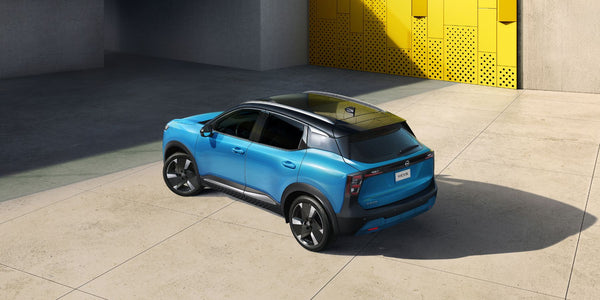
Nissan Kicks coming to UK - and it'll be built in Sunderland
Nissan is investing £170m to build a new model in its UK Sunderland plant. Me...

Business lease shortlist: four EVs worth comparing below £350 a month
Electric fleet choice is broadening quickly, and current lease pricing shows ...
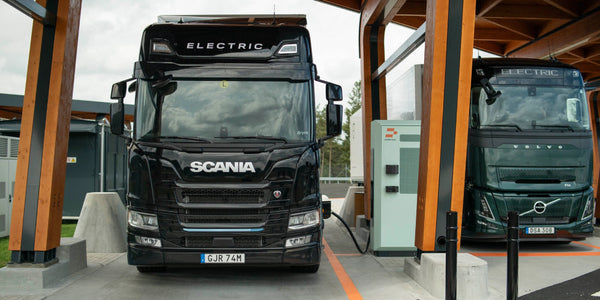
Megawatt charging is starting to fit around HGV rest periods
Electric truck charging is beginning to align more closely with the working p...

One charging record could simplify home, depot and public EV costs
Paua and Zaptec have partnered to bring home, workplace, depot and public cha...

BYD brings Chinese competition to Europe’s electric-truck market
Chinese manufacturer BYD plans to introduce its first heavy-duty truck in Eur...
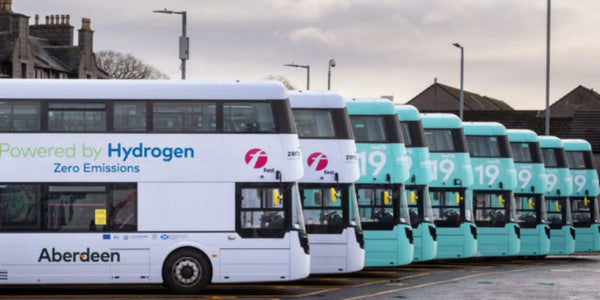
Hydrogen’s 95% value loss highlights whole-life cost risk
A fleet of Aberdeen hydrogen buses is providing a striking reminder that emer...
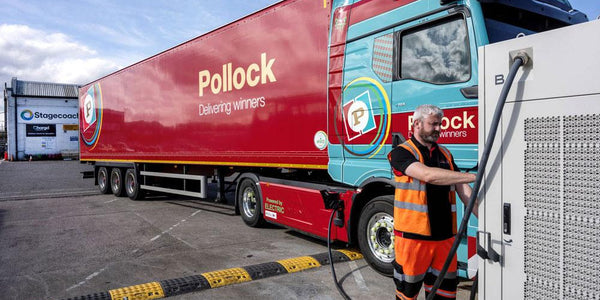
Shared depot charging unlocks a 320-mile electric HGV route
Gregory Group is using Stagecoach’s Inverness bus depot to charge electric HG...

Public Charging Price Watch: how much should fleets really be paying?
The UK average for PAYG rapid and ultra-rapid charging currently stands at ar...
Home charging gets easier for drivers without driveways
A key barrier to home EV charging is being reduced, with the Government confi...
Used EV values rise in August, but September registrations could apply pressure
Used electric vehicle values continued a period of recovery in August, with t...
Chery to expand its UK lineup with four new and refreshed models
Chinese car manufacturer, Chery is set to expand its UK lineup with four new ...
Volvo XC60 and XC90 SUVs given huge EV range boost
Volvo has given the XC60 and XC90 plug-in hybrid models a significant battery...

Volkswagen Amarok Dark Label Special Edition added to UK line-up
Volkswagen has opened UK order books for a new version of its pickup truck; c...
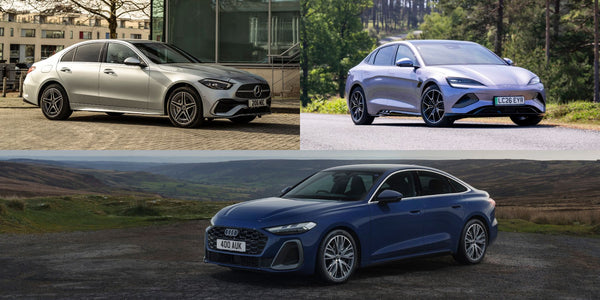
Business lease deals of the week: executive practicality
This week, we've found three top business lease deals on three executive cars...
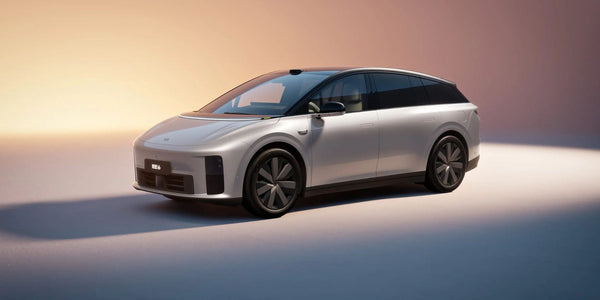
Another one? Chinese brand, Li Auto eyes up European market with i6 SUV
Chinese premium car manufacturer, Li Auto is preparing to expand into Europe,...
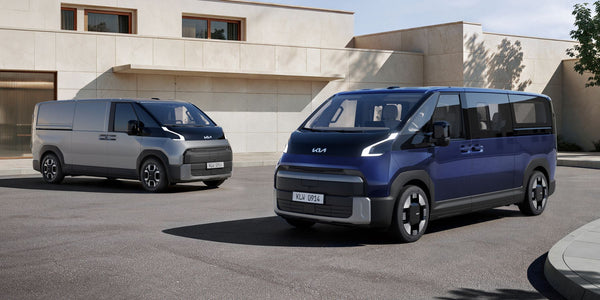
All-electric Kia PV7 unveiled | 286-mile range and 1,200kg payload
Kia has unveiled its new PV7 electric van, which gives fleets a longer, more ...
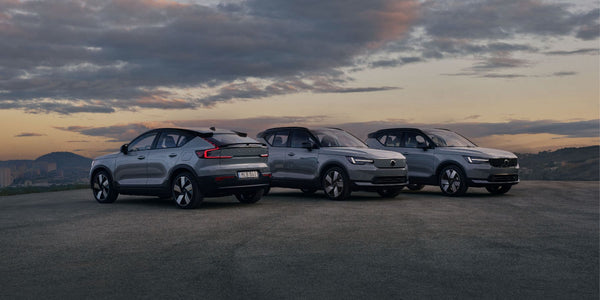
Volvo XC40, EX40 and EC40 facelifts unveiled
Volvo has unveiled the facelift versions of its XC40, EX40 and EC40 models, w...
BYD launches Approved Repair network, strengthening aftersales support
Chinese car giant, BYD has launched a 138 strong network of Approved Repair c...

Better Fleet: Your practical playbook for making fleet records easier to retrieve
Useful fleet information should still be useful six months after it was creat...
Better Fleet: Could the future be searching across your fleet systems without replacing them?
Fleet technology has traditionally presented businesses with two choices: Lea...

Better Fleet: Make fleet information easier to retrieve by making it easier to recognise
Having a record and being able to find it are two different things. A fleet m...
Public Charging Price Watch: Lidl cuts rapid charging to 59p/kWh
Lidl has reduced rapid EV charging to 59p/kWh for Lidl Plus users, down from ...
AA/Toyota Mythbuster Rally proves long-range viability of EVs
The AA and Toyota are taking part in a 1850-mile EV Mythbusters Rally across ...

Success Story: what fleets can learn from Greencore’s 191-van transformation
Greencore is nearing completion of a 191-vehicle urban delivery-van renewal p...

Motorway charging growth increasingly depends on the grid behind it
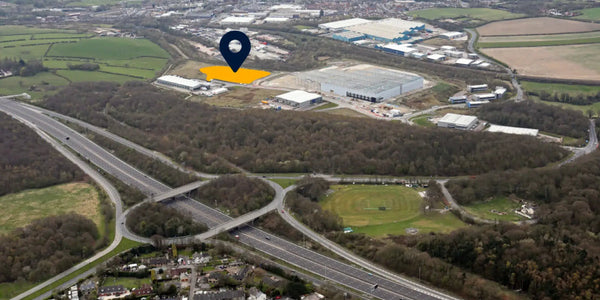
New commercial energy hub gives fleets more than one route to decarbonisation
Construction has started on a new Sheffield energy hub designed specifically ...