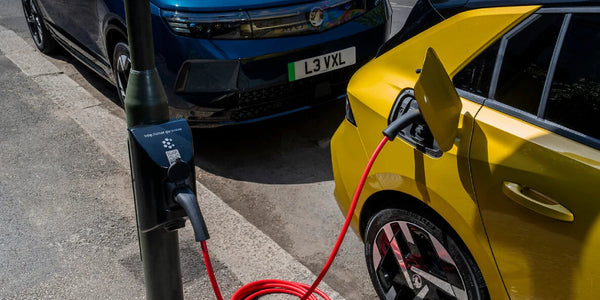


When allocating an electric vehicle to a job, a simple comparison can be tempting:
Route: 180 miles. Vehicle range: 230 miles. Job allocated.
But those two figures do not tell a fleet manager whether the vehicle is a good operational match.
What matters is the margin left once the conditions of that particular job are taken into account, and what happens if those conditions change.
For fleets pushing EVs onto longer and more demanding duties, that distinction is becoming increasingly important.
Move from range to an energy budget
A stronger allocation decision starts with the energy available at dispatch.
In simple terms:
Usable energy at departure
– expected energy required by the duty
– minimum operating reserve
= operational margin
That immediately changes the calculation.
Two vehicles of the same model can start the day with different available range because they have different states of charge, recent efficiency, battery condition or charging history.
And two 150-mile routes can impose very different energy demands.
Motorway speed, elevation, payload, auxiliary equipment, heating or cooling, congestion and stop-start operation can all alter consumption.
The decision therefore needs to become:
Can this specific vehicle complete this specific duty today with an acceptable margin?
Decide how much reserve the job requires
Running every EV with an enormous safety buffer protects against disruption, but it can also make perfectly viable routes look unsuitable for electrification.
Conversely, allocating almost every available kilowatt-hour creates little room for disruption.
The appropriate reserve should therefore reflect operational consequence, not simply driver comfort.
A predictable urban route returning to depot throughout the day could tolerate a different margin from a time-critical service journey into a rural location with limited charging alternatives.
Fleets could therefore create different reserve policies.
For example:
Lower-risk duty: predictable route, multiple recovery options, low consequence of delay.
Medium-risk duty: variable mileage or limited charging alternatives.
Critical duty: high service consequence, remote operation or little tolerance for interruption.
Forget thinking the fleet has one universal “safe range”, but consider the contingency each type of operation genuinely requires.
Distributions are better than averages
Average daily mileage is useful when deciding whether vehicles might be candidates for electrification, but it's less useful when dispatching them.
A route averaging 130 miles could regularly produce 170-mile days. An operation averaging modest payload might periodically leave fully laden.
Experienced fleets should therefore look at the spread of demand.
If 95% of comparable duties fall below a particular energy requirement, that provides a much stronger basis for vehicle allocation than the average alone.
The remaining exceptional journeys can then be identified explicitly rather than forcing the whole operation to accommodate them.
That is particularly important for long-distance routes.
The existence of several difficult journeys should not automatically determine the powertrain used for every journey.
Include the cost of being wrong
Route allocation is ultimately a risk decision.
If an EV needs an unplanned 20-minute charge, what does that actually cost the business?
For some operations, very little.
For others, it could mean a missed delivery window, engineer downtime, overtime, customer penalties or another vehicle being sent to recover the work.
That consequence should influence how aggressively a fleet uses available range.
A more mature allocation model therefore weighs both:
Probability of disruption × consequence of disruption.
A long route with a dependable charging contingency may actually represent lower operational risk than a shorter rural duty with nowhere practical to recover.
Mileage alone cannot show that.
Range anxiety can become measurable risk
This is where fleets can begin moving beyond range anxiety.
Concern about whether a vehicle will complete its work is reasonable when the answer is uncertain.
But uncertainty can increasingly be quantified.
Fleet managers can know:
- Available state of charge
- Historic energy consumption on comparable routes
- Vehicle-specific range capability
- Likely route demand
- Charging alternatives
- Required operating reserve
- Consequence if the plan fails
The objective is to replace a subjective question of “Do we think this EV will make it?” with a defensible operational decision.
And as fleets electrify more challenging duties, that could become one of the most important differences between simply owning EVs and operating them efficiently.
The second article in this Better Fleet series takes the fleet futureproofing element much further. The important development is that vehicle allocation does not have to remain a once-a-day dispatch decision.
Live SOC and charging status are already available in fleet systems, and current platforms explicitly support EV-aware routing and dispatch.
Read how vehicle allocation could become a live optimisation decision.
Similar Stories

Better Fleet: Build a route risk model before reserving your longest journeys for diesel
How should fleets formalise route risk so difficult journeys don't unnecessar...

Better Fleet: Why vehicle allocation could become a live optimisation decision
How could vehicle allocation become dynamic across the entire fleet? The bigg...

Public Charging Price Watch: off-peak tariffs widen the savings gap
Fleet managers willing to plan where and when drivers charge can now cut publ...
London tunnel charges have changed – check fleet systems now
Charges for using the Blackwall and Silvertown tunnels changed on 21 Septembe...
Young-driver EV demand strengthens the case for policy certainty
New E.ON Next research shows younger drivers are increasingly treating electr...
Smarter grid connections could accelerate the next wave of rapid charging
GRIDSERVE and Extra have opened a new 24-bay ultra-rapid charging hub at Cobh...
Business lease shortlist: four electrified cars for different fleet roles
This week's business lease shortlist covers a value-focused EV hatchback, a s...

Could your fleet be owed money from the £56m vehicle-shipping settlement?
Fleet operators that bought or leased new vehicles between October 2006 and S...

EVs now account for more than a quarter of new UK car registrations
Fresh Department for Transport data shows zero-emission vehicles continuing t...

Nissan X-Trail unveiled as U.S-market Rogue, UK arrival by 2028
Nissan has unveiled its next-generation X-Trail, with the new SUV set to brin...

High-mileage EVs have better MOT pass rates than petrol cars, study finds
New research shows that EVs are less likely to fail an MOT than petrol equiva...

Renault 5 gains more range and clever tech in mid-life update
The Renault 5 E-Tech has been treated to a series of efficiency, technology a...

Fuel prices 'to keep on rising', says RAC as diesel averages nearly £2 per litre
The latest fuel price figures show that the average price of petrol in the UK...

Business lease deals of the week: small SUVs to do it all
We've sourced three great business lease deals on small SUVs. See why they're...

Production spec Renault Trafic E-Tech revealed - arrives in the UK in 2027
The production variant of the Renault Trafic E-Tech has been revealed at the ...

Electric Ford Transit City now available with chassis cab
Ford has unveiled the new Transit City chassis cab, representing Ford Pro’s f...

Omoda & Jaecoo steps up RAC partnership with dedicated repair support
Omoda & Jaecoo's UK operation has expanded its partnership with the RAC i...

Nissan Kicks coming to UK - and it'll be built in Sunderland
Nissan is investing £170m to build a new model in its UK Sunderland plant. Me...

Business lease shortlist: four EVs worth comparing below £350 a month
Electric fleet choice is broadening quickly, and current lease pricing shows ...
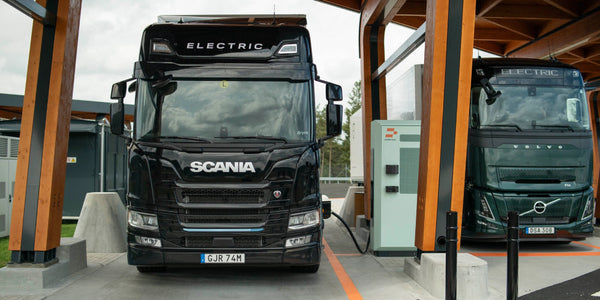
Megawatt charging is starting to fit around HGV rest periods
Electric truck charging is beginning to align more closely with the working p...

One charging record could simplify home, depot and public EV costs
Paua and Zaptec have partnered to bring home, workplace, depot and public cha...

BYD brings Chinese competition to Europe’s electric-truck market
Chinese manufacturer BYD plans to introduce its first heavy-duty truck in Eur...
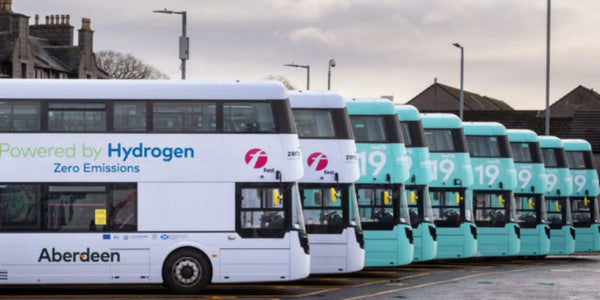
Hydrogen’s 95% value loss highlights whole-life cost risk
A fleet of Aberdeen hydrogen buses is providing a striking reminder that emer...
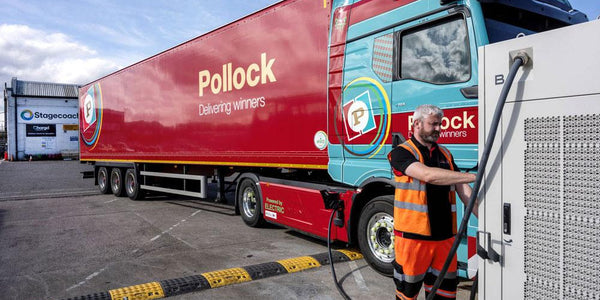
Shared depot charging unlocks a 320-mile electric HGV route
Gregory Group is using Stagecoach’s Inverness bus depot to charge electric HG...

Public Charging Price Watch: how much should fleets really be paying?
The UK average for PAYG rapid and ultra-rapid charging currently stands at ar...
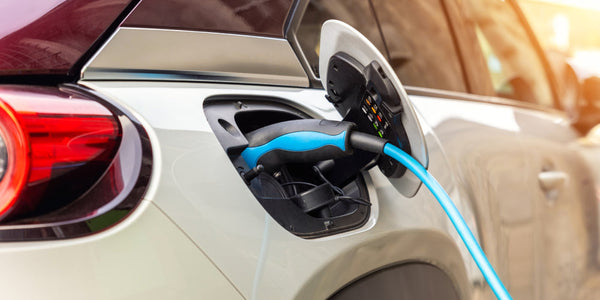
Home charging gets easier for drivers without driveways
A key barrier to home EV charging is being reduced, with the Government confi...

Geely targets 8000 UK fleet sales as Andrew Stuart sets out growth plans
Geely Auto UK sales director Andrew Stuart discusses its 8000-unit fleet targ...
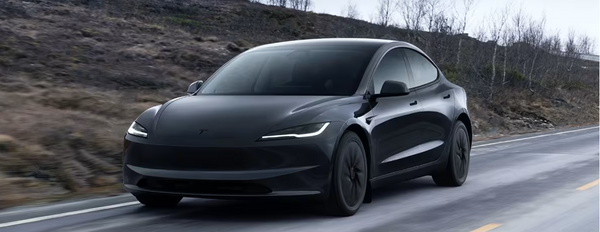
Used EV values rise in August, but September registrations could apply pressure
Used electric vehicle values continued a period of recovery in August, with t...

Chery to expand its UK lineup with four new and refreshed models
Chinese car manufacturer, Chery is set to expand its UK lineup with four new ...

Volvo XC60 and XC90 SUVs given huge EV range boost
Volvo has given the XC60 and XC90 plug-in hybrid models a significant battery...

Volkswagen Amarok Dark Label Special Edition added to UK line-up
Volkswagen has opened UK order books for a new version of its pickup truck; c...
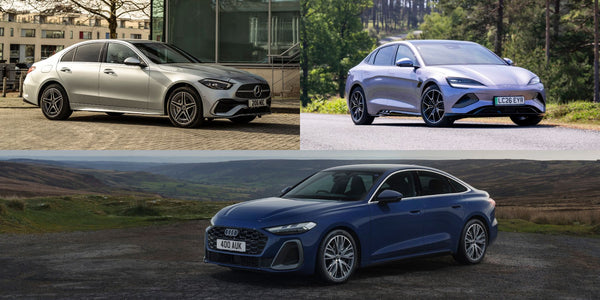
Business lease deals of the week: executive practicality
This week, we've found three top business lease deals on three executive cars...

Another one? Chinese brand, Li Auto eyes up European market with i6 SUV
Chinese premium car manufacturer, Li Auto is preparing to expand into Europe,...
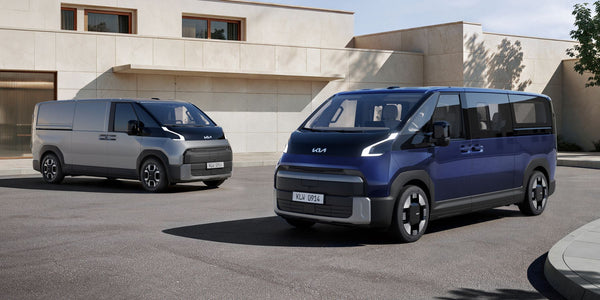
All-electric Kia PV7 unveiled | 286-mile range and 1,200kg payload
Kia has unveiled its new PV7 electric van, which gives fleets a longer, more ...

Volvo XC40, EX40 and EC40 facelifts unveiled
Volvo has unveiled the facelift versions of its XC40, EX40 and EC40 models, w...

BYD launches Approved Repair network, strengthening aftersales support
Chinese car giant, BYD has launched a 138 strong network of Approved Repair c...

Better Fleet: Your practical playbook for making fleet records easier to retrieve
Useful fleet information should still be useful six months after it was creat...
Better Fleet: Could the future be searching across your fleet systems without replacing them?
Fleet technology has traditionally presented businesses with two choices: Lea...

Better Fleet: Make fleet information easier to retrieve by making it easier to recognise
Having a record and being able to find it are two different things. A fleet m...
Public Charging Price Watch: Lidl cuts rapid charging to 59p/kWh
Lidl has reduced rapid EV charging to 59p/kWh for Lidl Plus users, down from ...

AA/Toyota Mythbuster Rally proves long-range viability of EVs
The AA and Toyota are taking part in a 1850-mile EV Mythbusters Rally across ...

Success Story: what fleets can learn from Greencore’s 191-van transformation
Greencore is nearing completion of a 191-vehicle urban delivery-van renewal p...

Motorway charging growth increasingly depends on the grid behind it

New commercial energy hub gives fleets more than one route to decarbonisation
Construction has started on a new Sheffield energy hub designed specifically ...